
Alcohol detox does not have a fixed waiting period before rehab admission: you can begin the admission assessment before detox is complete, but your treating clinician must decide when you are safe to enter the receiving programme. Some services provide medically supervised detox within treatment; others require stabilisation elsewhere first. For treatment planning in 2026, arrange medical assessment and rehab admission together rather than trying to finish withdrawal at home before asking for help.
- How long does alcohol detox take before rehab admission? Clinical stability and the receiving programme determine the timing.
- NHS guidance describes withdrawal as worst during the first 48 hours, with improvement over 3–7 days.
- The Cedars offers private alcohol rehabilitation; confirm the appropriate detox and admission pathway directly.
- Seizures, severe confusion or hallucinations during withdrawal require urgent medical attention, not a later rehab appointment.
Why this matters
A rehab booking is not a medical withdrawal plan. If you are physically dependent on alcohol, suddenly stopping or sharply reducing your drinking can cause dangerous withdrawal. Feeling ready for recovery does not tell you whether your body is ready for an unsupported stop.
The Cedars provides private addiction rehabilitation in South Africa. When you enquire, explain your current drinking, previous withdrawal experiences and other medicines so the conversation includes medical safety, not only an admission date.
You do not need to prove that you can stop alone before seeking treatment. Asking for help while you are still drinking gives the treating team information it needs to plan your care.
How long does alcohol detox take before rehab admission?
Rehab admission depends on medical readiness, not a universal number of alcohol-free days. The useful distinction is between admission assessment, supervised withdrawal and the start of the rehabilitation programme. These stages can overlap when the service has the appropriate clinical capacity.
The NHS alcohol misuse treatment guidance describes withdrawal symptoms as usually worst during the first 48 hours, with improvement as the body adjusts over 3–7 days. These are general withdrawal timings, not a promise that someone is safe for transfer on a particular day.
Use this distinction when arranging treatment in 2026:
| Stage | What determines timing | What it does not mean |
|---|---|---|
| Admission assessment | Your history, symptoms and the service's assessment process | You must already have completed detox |
| Medically supervised withdrawal | Withdrawal severity, treatment response and other health needs | Everyone follows the same timetable |
| Transfer into rehabilitation | Clinical stability and the receiving programme's capabilities | Feeling better automatically means clearance |
| Continuing recovery care | Your treatment needs and agreed recovery plan | Detox alone has treated alcohol dependence |
The NHS timings describe the early physical adjustment after stopping alcohol. Cravings, disrupted sleep and emotional distress can continue beyond that period, so the end of acute withdrawal is not the end of treatment.
Ask a precise question: “Can this programme safely manage my withdrawal, or do I need medical stabilisation before I arrive?” That answer matters more than a generic detox duration.
Early withdrawal: the first 48 hours need careful assessment
The first 48 hours are the period the NHS describes as usually worst for withdrawal symptoms. Shaking, sweating, nausea, anxiety and sleep disturbance need clinical assessment, especially if you have had difficult withdrawals before.
Do not use this timeframe as a countdown to safety. Serious complications can develop during withdrawal, and an apparently manageable start does not rule them out.
Seek urgent medical help for a seizure, severe confusion, hallucinations, collapse or marked agitation during withdrawal. Go to an emergency department or contact local emergency services; do not wait for a rehab admission response. If the person is unsafe, do not leave them alone or let them drive.
A relative can describe what they have observed, but cannot replace medical monitoring. Reassurance, food and a quiet room do not make potentially dangerous withdrawal safe.
Symptom improvement: 3–7 days is not an admission guarantee
The 3–7 days described in NHS guidance refer to improvement in withdrawal symptoms, not a compulsory waiting period before rehabilitation. Your clinician assesses whether your condition is stable and whether the next setting can provide the care you still need.
Someone with ongoing confusion, repeated vomiting or unstable physical observations needs further medical review. Someone whose acute symptoms have settled can still need support for cravings, anxiety, poor sleep or another health condition.
For your 2026 leave or family arrangements, treat the proposed transfer date as a clinical plan rather than a fixed deadline. Ask when the team will reassess readiness and how it will communicate any change.
Do not delay the rehab enquiry until the 3–7-day period has passed. Admission planning can begin while medical treatment is underway, provided the clinical teams agree on a safe pathway.
Why alcohol detox timing varies
Alcohol withdrawal is a medical process, not a test of willpower. These factors influence the level of care and the decision about transfer:
- Previous complicated withdrawal. A history of withdrawal seizures or delirium is important when assessing the risk of another episode.
- Current symptoms. Confusion, vomiting, severe agitation and worsening symptoms affect whether the current setting remains appropriate.
- Drinking pattern. The amount, frequency and duration of alcohol use help the clinician assess dependence and withdrawal risk.
- Other substances and medicines. Benzodiazepines, sedatives and other substance use can change the assessment and treatment plan.
- Physical and mental health. Pregnancy, significant illness, poor nutrition and acute mental health concerns need to be considered alongside withdrawal.
- The receiving service's capacity. A rehabilitation programme must be able to manage the care you still need after transfer.
Give the assessor an honest picture, even if parts of it feel difficult to discuss. Accurate information helps the team choose safer care; it is not a reason for shame.
Which setting is appropriate before rehabilitation?
The best detox setting is the one matched to your assessed medical risk. Hospital care, residential detox and medically supported outpatient withdrawal are not interchangeable. A clinician should recommend the setting rather than leaving you to choose based on convenience.
| Setting | Best for | Main advantage | Main limitation |
|---|---|---|---|
| Hospital treatment | People with severe withdrawal, complications or significant medical instability | Access to acute medical assessment and treatment | Rehabilitation may require a separate transfer |
| Residential medically supervised detox | People assessed as needing supervised withdrawal in an appropriately equipped residential service | Withdrawal care and treatment planning can be coordinated | Medical capabilities differ between services |
| Medically supported outpatient withdrawal | People assessed as suitable for treatment outside a residential setting | Treatment without a residential stay | Not appropriate for everyone; requires clinical oversight and a suitable support plan |
Outpatient withdrawal is not another name for stopping alone at home. It requires an assessment, prescribed care where indicated, monitoring and clear instructions about when to seek urgent help.
Likewise, the word “residential” does not establish that a centre can manage complicated withdrawal. Ask what medical support is provided and what happens if your symptoms exceed the service's capabilities.
If you are unsure where to begin, read about how to know if you need medical detox before rehab, then seek an individual clinical assessment.
How do I arrange detox and rehab without an avoidable gap?
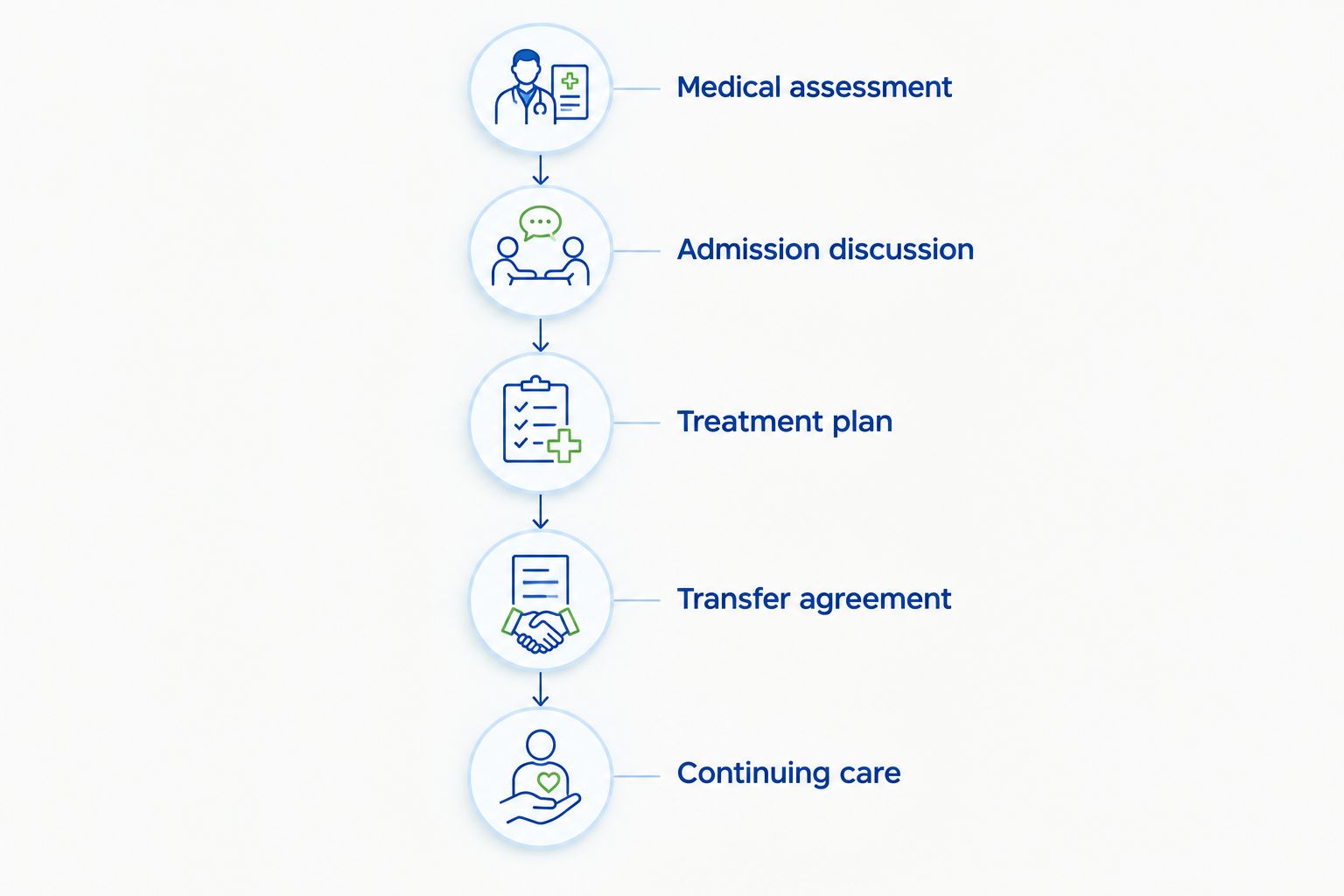
Arrange the medical pathway and rehabilitation pathway together. These steps help you identify who is responsible for your care at each stage, without assuming that a booking guarantees a safe transfer.
- Medical assessment. Tell the clinician when you last drank, your usual drinking pattern, previous withdrawal symptoms and any other substances or medicines. Report any current symptoms immediately.
- Admission discussion. Ask the rehabilitation service whether it provides the level of withdrawal care you need or requires prior stabilisation. Describe any recommendations already made by your clinician.
- Treatment plan. Confirm where withdrawal will be managed, who will monitor you and what should happen if symptoms worsen. Do not create your own alcohol taper or borrow withdrawal medicines.
- Transfer agreement. Ask the treating and receiving teams to agree on clinical readiness and the handover information. Confirm transport only once the appropriate plan is clear.
- Continuing care. Establish who will review ongoing medicines, sleep problems, cravings and mental health needs after admission. Withdrawal care and rehabilitation should connect rather than operate as unrelated episodes.
The order reflects planning, not an instruction to wait at home between stages. If urgent symptoms develop, emergency assessment takes priority over paperwork or a planned appointment.
For a 2026 admission enquiry, write down the answers rather than relying on memory during a stressful conversation. A family member can help with the discussion if you want their involvement and consent to sharing information.
The Cedars is best suited to people seeking private alcohol rehabilitation with 12-step treatment and family support. Confirm the detox arrangements for your circumstances directly; the availability of rehabilitation does not establish that every withdrawal risk can be managed in the same setting.
Ask about your admission pathway
Discuss alcohol rehabilitation and ask which medical detox arrangements fit your circumstances.
Can I enter rehab before alcohol detox is finished?
Yes, if the receiving service can safely provide the withdrawal care you need and accepts you following assessment. Otherwise, your clinician and the rehabilitation team should arrange stabilisation and transfer. Do not assume that every private rehab provides the same medical services.
Do I need to be alcohol-free for 7 days before admission?
No universal 7-day alcohol-free rule determines rehab admission. The NHS 3–7 days describes general symptom improvement, not an admission requirement. Ask the receiving programme for its assessment criteria and let the treating clinician determine medical readiness.
What happens if I still feel unwell when detox ends?
Ongoing symptoms need review, not an automatic delay or an automatic clearance. Your clinician should distinguish continuing withdrawal from other physical or mental health needs. Tell the receiving team what symptoms remain so treatment can continue appropriately.
What should my family help organise?
Your family can help collect a medicines list, previous discharge information and details of earlier withdrawal episodes. With your consent, they can also help confirm the admission plan and transport arrangements.
They should not be expected to decide whether withdrawal is medically safe. Nor should they administer someone else's prescription or change your medicines without clinical instructions.
For 2026 treatment planning, separate the medical decisions from practical arrangements such as leave, childcare and travel. Ask who will update your family, what information you consent to share and whom they should contact if the plan changes.
FAQ
How long does alcohol detox take before rehab admission?
There is no fixed waiting period before rehab admission; medical stability and the receiving programme determine the timing. NHS guidance describes withdrawal as usually worst during the first 48 hours, with improvement over 3–7 days, but these timings do not establish transfer readiness.
Can I stop drinking at home while I wait for rehab?
Do not attempt unsupported withdrawal if you are physically dependent on alcohol. Seek medical advice before stopping or sharply reducing your drinking, and seek urgent care for severe withdrawal symptoms.
Does feeling better mean I am ready for rehab?
Feeling better does not by itself establish that you are medically ready for transfer. Your treating clinician should assess stability, and the receiving service should confirm it can manage your remaining care needs.
What alcohol withdrawal symptoms require emergency help?
A seizure, severe confusion, hallucinations, collapse or marked agitation during withdrawal requires urgent medical attention. Do not wait for a planned rehab appointment or admission callback.
Can my family organise admission while I am in hospital?
Your family can help coordinate admission with your consent while the hospital team manages your medical care. The treating and receiving teams should agree on readiness and the handover before transfer.
Does The Cedars offer alcohol addiction treatment?
The Cedars provides private alcohol addiction rehabilitation, including 12-step treatment, relapse prevention and family support. Ask directly about the detox and admission arrangements appropriate to your medical needs.
Is alcohol detox the same as rehabilitation?
Alcohol detox and rehabilitation serve different purposes: detox manages withdrawal, while rehabilitation addresses continuing addiction and recovery needs. Completing withdrawal does not replace relapse prevention or ongoing support.
One last thing
Before discharge, ask who is responsible for your care until the rehabilitation team takes over. A date on a calendar is not a handover. Confirm the medicines instructions, transport plan, receiving contact and response to worsening symptoms before you leave.
You do not have to solve the whole recovery journey today. Your next step is a safe assessment and a clear connection to continuing treatment—not proving that you can endure withdrawal alone.
Related guides
- Hospital detox to inpatient rehab: the handover
- How to prepare for your first day at inpatient rehab
- How to support a family member through rehab