
Yes, rehab is worth it in 2026 when addiction is harming your life and the treatment matches your clinical needs. Its value lies in safe care, support to change addictive behaviours, and preparation for life after treatment—not a guaranteed cure. Before committing, check how the programme handles withdrawal, mental health, family involvement, and continuing care.
- Is rehab worth it in 2026? Yes, when addiction treatment matches your needs and includes continuing recovery support.
- The Cedars offers private addiction rehabilitation with detox, 12-step based treatment, relapse prevention, and family support.
- Residential rehab provides structure; outpatient treatment depends on whether living at home is clinically appropriate.
- Choose care through a clinical assessment, not promises of a cure or an unexplained success rate.
Is rehab worth it in 2026?
Rehab is worth considering when repeated attempts to stop have not lasted, substance use is causing harm, or your home environment makes recovery difficult. The right question is not whether every rehab works; it is which level of care addresses your needs. Start with a professional assessment and use these principles for choosing a rehab centre in South Africa.
Different forms of support serve different purposes. This comparison explains their strengths and limitations; it does not replace an individual assessment.
| Support option | Best for | Main benefit | Main limitation |
|---|---|---|---|
| Residential rehab | People assessed as needing a structured treatment setting away from home | Creates space for treatment and recovery routines | Requires time away from everyday responsibilities and a planned transition home |
| Outpatient treatment | People assessed as able to receive treatment safely while living at home | Allows treatment alongside some daily responsibilities | Leaves you exposed to your usual environment between appointments |
| Medical detox | People whose withdrawal needs medical management | Addresses withdrawal safety and stabilisation | Does not, by itself, address the wider patterns sustaining addiction |
| Peer recovery support | People seeking shared experience and ongoing recovery connection | Provides community and practical encouragement | Does not replace medical assessment, detox, or individual clinical care |
Why this matters
When you are exhausted by addiction, deciding about treatment can feel like another burden. You might worry about work, children, privacy, or whether asking for help means admitting defeat. Those concerns deserve practical answers rather than pressure.
Rehab is not a punishment for losing control. It is a treatment setting in which you can work on substance use, understand recurring difficulties, and practise different responses with support.
In 2026, assess a programme by what it does for your recovery—not by its accommodation, reassuring language, or a promise that everything will change. A comfortable setting does not answer questions about withdrawal safety or the plan for leaving treatment.
This guide supports your decision; a qualified healthcare professional should assess your individual treatment needs. If someone is unconscious, having a seizure, struggling to breathe, or at immediate risk of self-harm, seek emergency care rather than waiting for a rehab admission.
Residential rehab: when structure is the main benefit
Residential treatment is most relevant when you need a structured setting and distance from circumstances that repeatedly interrupt recovery. It gives you space to participate in treatment without returning home after each appointment.
The benefit is not simply being away. Ask how the daily programme helps you recognise triggers, respond to cravings, address emotional difficulties, and prepare for responsibilities outside treatment. A timetable is useful only when the activities have a clear therapeutic purpose.
The limitations deserve equal attention. Leaving home can disrupt caregiving and employment, and living in a treatment setting is different from managing recovery in everyday life. Choose residential care when the assessment supports it, and ask about the transition home before admission.
Outpatient treatment: when living at home is appropriate
Outpatient treatment is best suited to people whose clinical assessment supports receiving care while remaining at home. It allows treatment to take place alongside some ordinary commitments.
Its strength is also its challenge: you practise recovery in your actual environment, but that environment can contain ready access to substances, conflict, or pressure to use. Discuss those conditions honestly with the assessing professional.
Do not choose outpatient care solely because it seems easier to fit around work. Ask whether it provides the level of support you need and what happens if your symptoms or substance use worsen.
Medical detox: when withdrawal needs clinical care
Medical detox addresses withdrawal and stabilisation. It is not interchangeable with the counselling, behaviour change, and continuing support involved in addiction rehabilitation.
Withdrawal from alcohol or benzodiazepines can be dangerous. Do not abruptly stop these substances without medical advice when dependence is possible. Tell the clinician what you take, how you take it, and whether you have experienced withdrawal before.
Ask where withdrawal will be managed, who provides the medical care, and how you will move into further treatment. A detox plan needs a next step; completing withdrawal does not resolve every reason substance use has continued.
Why the value of rehab varies
Rehab is not one identical service delivered in different buildings. Its value depends on the relationship between your needs, the treatment provided, and the support available afterwards.
- Clinical fit: The programme needs to address your substance use, withdrawal risks, and relevant health needs.
- Mental health care: Depression, anxiety, trauma symptoms, or other difficulties need assessment rather than assumptions that stopping substance use will resolve everything.
- Treatment approach: You need to understand what sessions involve and how they connect to your recovery goals.
- Family involvement: Supportive participation requires clear boundaries, consent, and attention to whether family contact is safe.
- Continuing care: Discharge planning needs to identify your next treatment contacts and what to do when difficulties arise.
- Practical fit: Leave, caregiving, travel, and funding arrangements affect whether you can enter treatment and follow through afterwards.
A programme that sounds appealing can still be unsuitable. Ask for clear answers about these factors before making a decision, and take unresolved clinical questions back to the professional assessing you.
How do you decide whether rehab is right for you?
You do not need to diagnose yourself before asking for help. Start by describing what is happening, including the details you feel tempted to minimise. An assessment is a place to establish needs, not to prove that you have suffered enough.
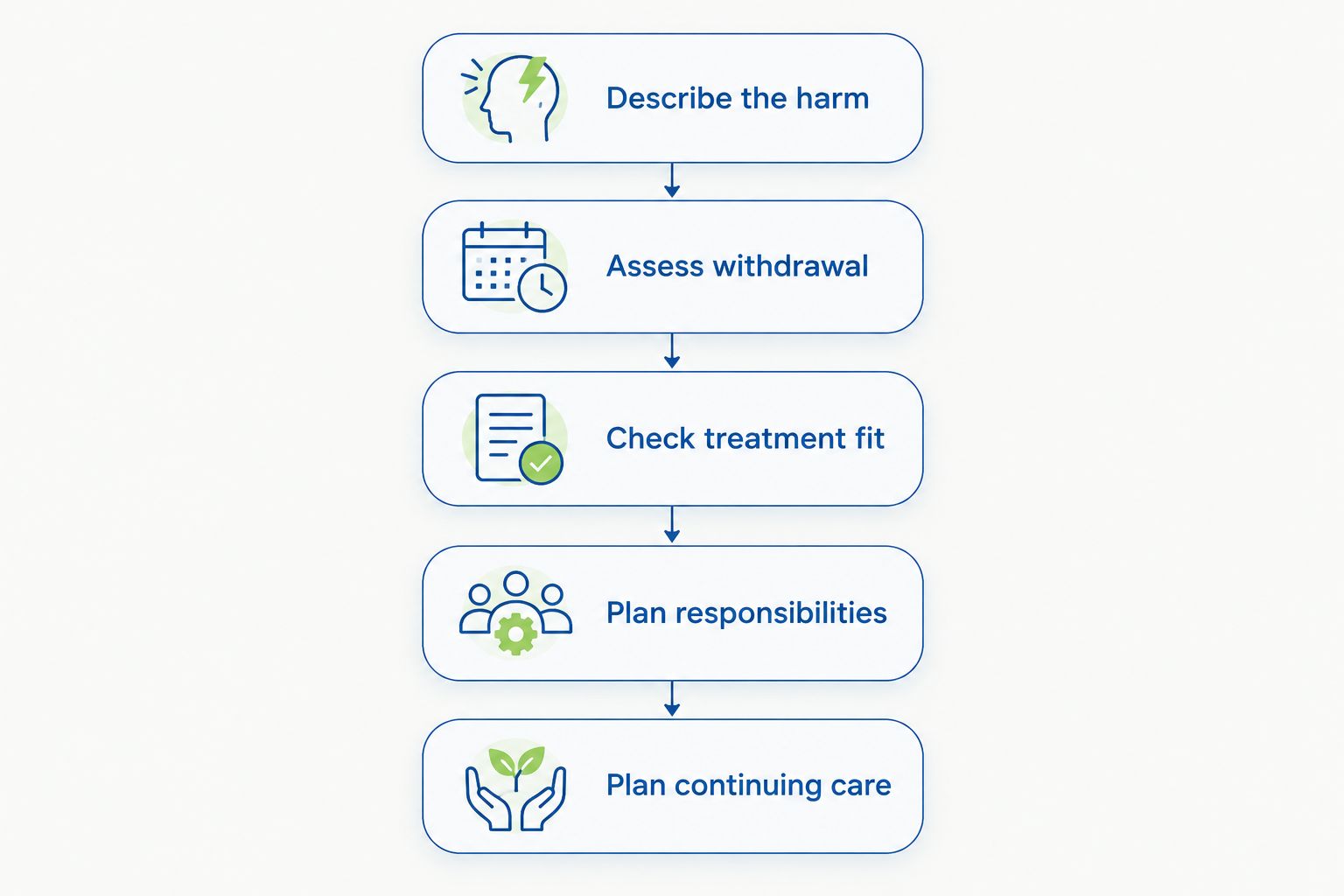
Use the following sequence to turn a difficult decision into practical questions.
- Describe the harm. Explain how substance use affects your health, relationships, work, finances, or safety. Include attempts to stop and what happened afterwards.
- Assess withdrawal. Discuss every substance and medicine you use, previous withdrawal symptoms, and relevant medical conditions. Let a clinician determine the safest next step.
- Check treatment fit. Ask which level of care is recommended, why it is recommended, and how the programme addresses mental health alongside addiction.
- Plan responsibilities. Identify who will manage caregiving and essential commitments during treatment. Confirm funding and any medical-aid authorisation directly before admission.
- Plan continuing care. Ask what happens after discharge, who you will contact, and how the plan responds to cravings or a return to use.
Bring someone you trust to the discussion if that helps you remember questions or explain your situation. You can also write your concerns down beforehand. You do not need a polished account of your life to deserve care.
What should a rehab centre explain before you enrol?
A useful admission conversation connects the programme to your situation. In 2026, ask for specific explanations rather than accepting general assurances about personalised treatment.
Who will assess and treat me?
Ask which professionals assess your needs and who delivers the treatment. Clarify how medical and mental health concerns are referred or managed, including concerns that arise after admission.
What happens if I struggle with the programme?
Treatment can involve difficult conversations and unfamiliar routines. Ask how staff respond when you feel overwhelmed, disagree with an approach, or need additional clinical support. Respectful care should leave room for questions.
How is progress reviewed?
Ask how your goals are agreed and reviewed during treatment. Progress should relate to your needs, not only attendance or completing a schedule. Useful discussions include safety, participation, coping skills, and readiness for the next level of care.
What happens when I leave?
Ask who helps arrange continuing support and what information you will receive. Clarify how medication follow-up, counselling, peer support, and family boundaries fit your individual plan. Do not assume these arrangements happen automatically.
Where The Cedars fits
The Cedars is suited to people seeking private addiction rehabilitation with a 12-step based approach and family support. It is a boutique group of residential addiction and mental health rehabilitation centres in South Africa, offering drug and alcohol detox, relapse prevention, and family support programmes.
The Cedars addiction rehabilitation offering brings those elements into the treatment discussion. The limitation is that a service description alone cannot establish whether residential care or its treatment approach is right for you; an individual assessment remains necessary.
You can explore The Cedars and ask how the programme would address your specific needs. Discuss withdrawal, mental health, family involvement, and the transition out of residential treatment—not just the admission itself.
Discuss your treatment needs
Ask about assessment, detox, residential treatment, and support for your family.
Is rehab still worth it if I have relapsed before?
Yes, rehab can still be worth considering after relapse; the priority is reassessing what support you need. A return to use does not make you undeserving of care or prove that every treatment option has failed.
Review what happened before the relapse, which support was in place, and what needs remained unresolved. Be cautious about repeating an unchanged plan without discussing those difficulties. After reduced opioid use, loss of tolerance increases overdose risk if you return to use; seek medical advice promptly.
Is rehab worth it if I am still working and functioning?
Yes, assessment is worthwhile even when you are meeting work or family responsibilities. Employment and outward stability do not rule out harmful substance use or dependence.
Look at the effort required to maintain appearances, failed attempts to cut down, and consequences you keep managing privately. You do not need to lose your job or reach a crisis before seeking help in 2026.
Is rehab worth it for my family as well as me?
Rehab can benefit family relationships when treatment includes appropriate support and realistic boundaries. Your relatives may need help understanding addiction, responding to difficulties, and separating support from taking responsibility for your recovery.
Family involvement is not automatically appropriate in every situation. Discuss consent, conflict, and safety with the treatment team. Rebuilding trust takes consistent behaviour beyond admission; attending rehab does not require relatives to feel reassured immediately.
FAQ
Is rehab worth it in 2026 if I have tried to quit before?
Yes, rehab is worth considering in 2026 when attempts to quit have not lasted or substance use is causing harm. A clinical assessment can identify whether residential care, outpatient treatment, or medically managed withdrawal fits your needs.
Do I have to hit rock bottom before going to rehab?
No, you do not need to reach a crisis before seeking addiction treatment. Harm to your health, relationships, safety, or ability to control substance use is enough reason to request an assessment.
Is inpatient rehab better than outpatient treatment?
Neither is better for everyone; the appropriate setting depends on your clinical needs and home circumstances. Residential care provides a structured setting away from home, while outpatient care requires assessment of whether treatment at home is appropriate.
Can I detox at home before going to rehab?
Do not begin a home detox without medical advice when dependence or withdrawal risk is possible. Alcohol and benzodiazepine withdrawal can be dangerous, and a clinician should assess the safest setting.
Does going to rehab guarantee that I will not relapse?
No, rehab does not guarantee that you will never return to substance use. Ask how treatment develops coping skills and how continuing care responds if difficulties arise.
Does medical aid cover rehab in South Africa?
Confirm rehab cover directly with your medical aid before admission. Ask about your specific benefits, authorisation requirements, provider arrangements, and any exclusions rather than assuming treatment is covered.
Who is The Cedars rehabilitation treatment suited to?
The Cedars is suited to people seeking private addiction rehabilitation with a 12-step based approach and family support. An individual assessment is needed to establish whether its residential treatment matches your clinical needs.
One last thing
Before agreeing to treatment in 2026, ask the centre to explain what your first steps after discharge will look like. Who will you contact, what support will continue, and what will you do if cravings become difficult to manage?
A clear plan for leaving rehab is part of the reason to enter it. You are not choosing a place to hide from your life; you are choosing support to return to it with safer habits, practical tools, and people you can turn to.
Related guides
- How to choose between inpatient and outpatient rehab
- How to know if you need medical detox before rehab
- How to support your recovery after leaving rehab