
Yes—outpatient rehab can be as effective as inpatient rehab for people whose medical needs, mental health, home environment and treatment intensity make outpatient care appropriate. It is not an equivalent substitute when you need supervised withdrawal, protection from an unsafe environment or more support than scheduled appointments provide.
- Is outpatient rehab as effective as inpatient rehab? Yes, for appropriately assessed patients receiving suitable treatment and support.
- Inpatient rehab provides residential structure; outpatient rehab requires safety and reliable support between appointments.
- Medical detox and addiction rehabilitation address different needs; withdrawal risk needs assessment before choosing a setting.
- The Cedars offers residential addiction treatment for people seeking structured care, relapse prevention and family support.
Is outpatient rehab as effective as inpatient rehab?
Outpatient rehab can deliver comparable outcomes for appropriately selected patients, but neither setting is best for everyone. The useful comparison is between programmes that meet your needs—not simply between sleeping at home and sleeping at a centre.
Outpatient programmes also differ in intensity. Occasional counselling is not the same as intensive outpatient treatment with coordinated therapy, clinical review and recovery support. Comparing either one with residential care without accounting for those differences gives you an incomplete answer.
For a practical assessment checklist, read about choosing between inpatient and outpatient rehab.
| Setting | Best for | Main advantage | Main limitation |
|---|---|---|---|
| Outpatient rehab | People assessed as safe between appointments, with a supportive home and reliable attendance | You practise recovery skills in everyday life while attending treatment | Support is not continuously present, and home triggers remain |
| Residential rehab | People who need a structured living environment and separation from everyday substance-use triggers | Treatment and daily routines take place within a recovery-focused setting | You leave your usual responsibilities, and returning home still needs planning |
| Medically managed inpatient care | People whose withdrawal, medical condition or psychiatric risk requires hospital-level care | Clinical monitoring and treatment address acute health risks | Stabilisation alone does not replace continuing addiction treatment |
The word inpatient is often used loosely to describe residential rehab. Ask what a programme actually provides: living on site does not automatically mean hospital-level medical care.
Why this matters
Choosing rehab in 2026 is not a test of how serious you are about recovery. Accepting outpatient care does not mean you are taking addiction lightly, and entering residential care does not mean you have failed.
The wrong setting leaves important needs uncovered. An outpatient programme cannot compensate for a dangerous home environment simply by offering good counselling; a residential stay cannot protect recovery indefinitely without a workable plan for life afterwards.
Choose the level of care that makes treatment safe and achievable, then review it as your needs change. Your first decision does not have to be your permanent one.
When outpatient rehab is the better fit
Best for: people who can remain safe and engaged in recovery between treatment sessions. Outpatient care allows you to stay at home while attending planned treatment. Its strength is that you can discuss real-life difficulties with your team as they happen.
A clinician should assess withdrawal risk, current substance use, physical health and mental health before recommending this setting. Safe housing, dependable transport and the ability to attend appointments also matter. Wanting to keep working is understandable, but work commitments cannot determine whether outpatient care is medically appropriate.
Consider what happens outside treatment. Can you avoid people who supply substances? Is there someone you can contact when cravings intensify? Can you attend appointments without having to hide them or repeatedly cancel?
Outpatient care also has limits. Treatment sessions do not remove substances from your home, resolve abuse or create support where none exists. If you regularly return to an environment that undermines recovery, tell the assessing clinician rather than trying to prove you can manage alone.
Recommendation: choose outpatient rehab when assessment supports it and the support between sessions is workable—not merely because it causes less disruption.
When residential rehab is the better fit
Best for: people who need a protected living environment, daily structure and concentrated attention to recovery. Residential treatment removes the need to return home after each session. That separation can help when ordinary routines repeatedly lead back to substance use.
Residential care provides a setting for therapy, recovery activities and new habits. It does not remove the need for individual assessment. A person with severe withdrawal or an acute psychiatric emergency needs an appropriate medical service, not just a residential bed.
The Cedars offers private residential addiction and mental health rehabilitation in South Africa, including detox, 12-step based treatment, relapse prevention and family support programmes. The Cedars is best for people seeking structured residential addiction treatment with relapse prevention and family support. Suitability still depends on an assessment of your individual needs.
Residential care has practical drawbacks. You spend time away from home, work and caring responsibilities, and the protective environment is different from everyday life. Before admission, ask how the programme helps you prepare for that transition.
Recommendation: choose residential rehab when your recovery needs more structure or environmental protection than outpatient care can provide. Do not mistake residential treatment for a guarantee against relapse.
When medical care must come first
Best for: people with acute withdrawal, serious medical complications or immediate psychiatric risk. Medical stabilisation and rehabilitation are connected, but they are not interchangeable. Detox addresses withdrawal; rehabilitation addresses the patterns, behaviours and circumstances that sustain addiction.
Alcohol and benzodiazepine withdrawal can cause seizures and other serious complications. Do not abruptly stop or attempt an unsupervised detox if you are physically dependent; seek medical advice about a safe withdrawal plan.
A seizure, severe confusion, breathing difficulty, suspected overdose or immediate risk of self-harm requires emergency help. Do not wait for a routine rehab assessment. A local emergency department can assess urgent medical needs.
After stabilisation, a clinician should reassess the appropriate treatment setting. Needing medical detox does not automatically settle the later choice between residential and outpatient rehabilitation.
Why rehab effectiveness varies
For a rehab decision in 2026, the programme name tells you less than whether its care matches your circumstances. These factors explain why the same setting does not work equally well for everyone:
- Withdrawal and physical health: Your treatment plan must address medical risks before relying on therapy or peer support.
- Mental health needs: Depression, anxiety, trauma symptoms and other conditions need assessment and coordinated care alongside addiction treatment.
- Home safety: Substance use in the household, violence or unstable housing can make recovery between appointments difficult or unsafe.
- Treatment intensity: The frequency and type of clinical contact must match your needs; all outpatient programmes are not equivalent.
- Attendance and engagement: Transport, work schedules and caring duties influence whether you can participate consistently.
- Continuing support: Follow-up care, relapse planning and supportive relationships matter after either setting ends.
These are not reasons to blame yourself if treatment has been difficult. They are reasons to adjust the plan. Be honest about barriers so the team can assess the support you actually need.
How to choose the right level of care in 2026
Start with a clinical assessment rather than choosing a programme from its accommodation or timetable. Bring a clear account of your substance use, prescribed medicines, withdrawal experiences, mental health symptoms and previous treatment.
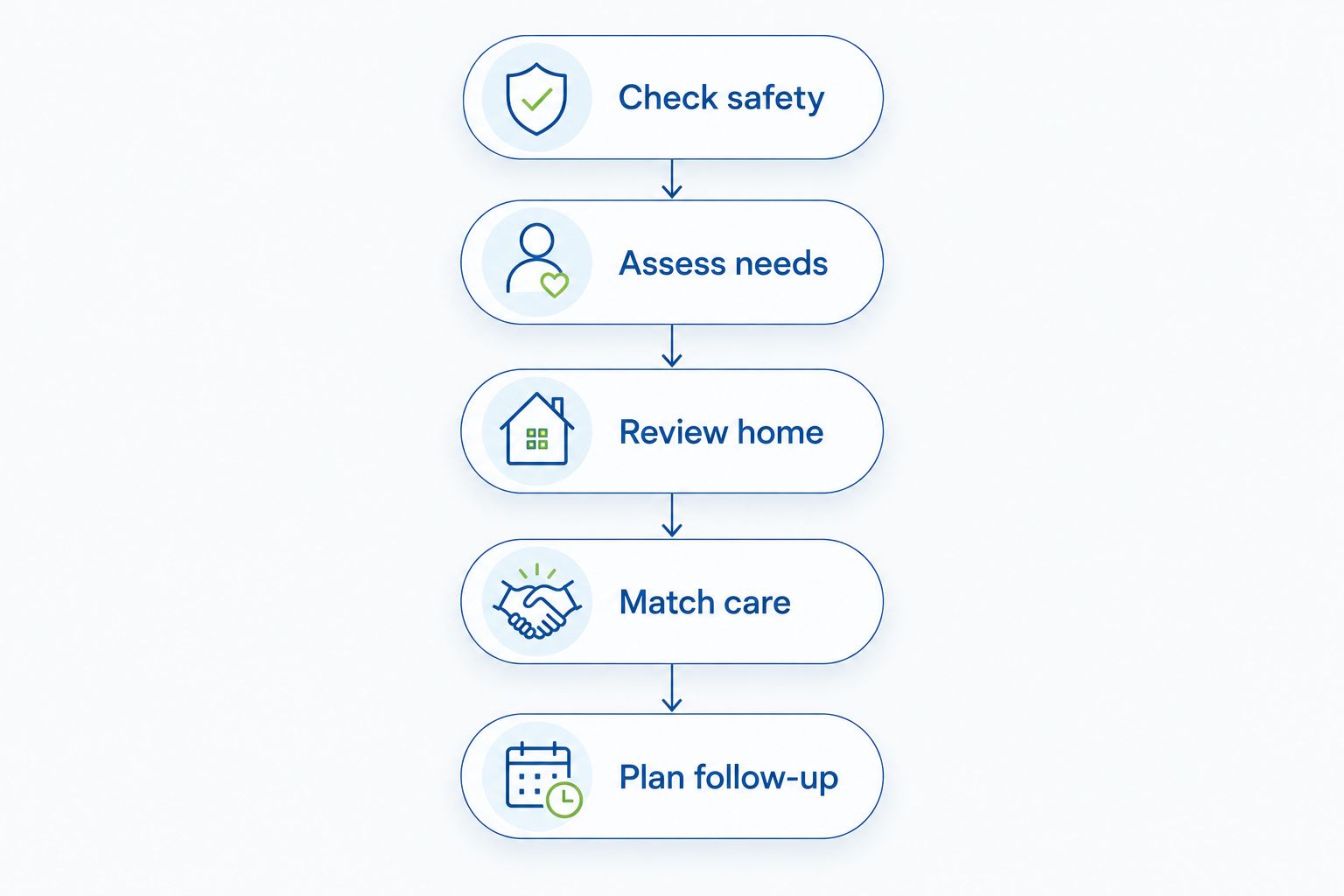
Use this sequence to organise the discussion:
- Check safety. Describe current symptoms, previous severe withdrawal, overdose history and any thoughts of self-harm. Urgent risks need immediate care.
- Assess needs. Ask which medical, psychological and addiction-related needs require treatment, and which setting can address them.
- Review home. Explain who lives with you, whether substances are present and what happens when you are distressed or craving.
- Match care. Discuss the programme's actual treatment schedule, clinical support and arrangements for deterioration or missed appointments.
- Plan follow-up. Agree how support will continue, who will review progress and what would trigger a change in care.
A useful assessment ends with an explanation, not just a recommendation. You should understand why the proposed setting fits your current risks and what would make the team reconsider it.
What should you ask a rehab provider?
When comparing rehab programmes in 2026, ask for concrete descriptions of care. Words such as intensive, personalised or residential do not tell you who treats you or what happens during a difficult evening.
Useful questions include:
- Who assesses whether this setting is safe for me?
- What medical support is provided, and what requires transfer elsewhere?
- How are mental health symptoms assessed and treated?
- What does a normal treatment week include?
- What happens if I miss appointments or return to substance use?
- How are family members involved, with my consent?
- What support is arranged before treatment ends?
Ask how the provider measures outcomes, too. A claim of success is not meaningful without knowing what success means, who was included and whether people were followed after leaving treatment. Completing a programme and sustaining recovery are different outcomes.
For The Cedars residential rehab, discuss your medical needs, family circumstances and expectations before making an admission decision. That conversation should establish fit rather than promise an outcome.
Discuss your treatment needs
Explore residential addiction treatment, relapse prevention and family support in South Africa.
Can you start with inpatient rehab and continue as an outpatient?
Yes—residential treatment and outpatient care can be stages of the same recovery plan. A transition to less intensive support should follow a review of your stability, home circumstances and ability to participate, rather than happen simply because a stay has ended.
Before leaving residential care, identify your follow-up provider and arrange the next contact. Discuss medication continuity where relevant, recovery support and what to do if cravings or mental health symptoms worsen.
Does a relapse mean outpatient rehab has failed?
No—a return to substance use calls for reassessment, not a judgement about your character. The team should examine what happened, whether the treatment intensity remains appropriate and whether withdrawal, overdose or psychiatric risks have changed.
Sometimes the plan needs more support within outpatient care; sometimes a different setting is necessary. After a period without opioids, reduced tolerance increases overdose risk, so returning to previous patterns of use is particularly dangerous.
How do you know whether treatment is helping?
Look for changes in safety, substance use, daily functioning and engagement with care—not attendance alone. Discuss cravings, sleep, relationships, mental health symptoms and your ability to manage difficult situations with your treating team.
Agree what progress will look like for you. If the current plan leaves you repeatedly unsafe or unable to participate, request a review instead of waiting for the programme to finish.
FAQ
Is outpatient rehab as effective as inpatient rehab for alcohol addiction?
Outpatient rehab can be as effective for appropriately assessed people with alcohol addiction, but withdrawal risk must be assessed first. Physical dependence, previous severe withdrawal and home safety influence the appropriate setting.
What’s the best rehab setting if I keep relapsing?
The best setting is the one that addresses the reasons you keep returning to substance use. Repeated relapse warrants reassessment of treatment intensity, mental health needs and your environment rather than an automatic choice based on the programme label.
Can I work while attending outpatient rehab?
You can work during outpatient rehab if the programme schedule and your clinical needs allow it. Discuss attendance, workplace triggers and whether your responsibilities would interfere with treatment.
Is residential rehab the same as hospital treatment?
Residential rehab is not automatically hospital treatment. Ask what medical monitoring is provided and whether withdrawal or psychiatric risks require a medically managed setting.
Do I need detox before choosing inpatient or outpatient rehab?
You need a withdrawal-risk assessment to determine whether detox is necessary. Detox and rehabilitation address different needs, so the care setting should be reviewed after any required stabilisation.
Can my family support me instead of inpatient rehab?
Family support can strengthen recovery, but it does not replace medical care or an appropriate treatment programme. Family members should not be expected to manage dangerous withdrawal or an acute mental health crisis at home.
Does The Cedars provide residential addiction treatment?
The Cedars provides private residential addiction and mental health rehabilitation in South Africa, including detox, 12-step based treatment, relapse prevention and family support. Discuss your individual needs to establish whether residential care is appropriate.
One last thing
The most protective programme is not necessarily the most restrictive one. It is the programme that addresses your actual risks and gives you enough support to keep participating in care.
If you are making this decision in 2026, write down what happens on your hardest evening—not just how you feel during an assessment. Tell the clinician about that evening. The hours between appointments often reveal whether outpatient support is enough or whether you need a residential setting.
Related guides
- How to know if you need medical detox before rehab
- How to support a family member through rehab
- How to support your recovery after leaving rehab