
Dialectical Behaviour Therapy (DBT) is the model rehab centres reach for when addiction comes wrapped in emotional dysregulation, self-harm history, or a borderline personality diagnosis, and in 2026 more South African facilities are advertising the acronym than are actually running the full four-module version.
- The best dbt rehab centres in South Africa split into six settings, not six brands — the setting matters more than the name on the gate.
- Private inpatient rehab centres such as The Cedars suit patients who want daily, therapist-led DBT skills coaching in a residential setting.
- Free and government-funded rehab centres run DBT groups but with shorter modules and longer waiting lists.
- Intensive outpatient DBT programs let working professionals keep their job while attending structured sessions several times a week in 2026.
Why DBT rehab matters for addiction recovery in South Africa
DBT was built in the 1980s by psychologist Marsha Linehan for patients with chronic suicidality and intense emotional swings, not for addiction specifically, and confirming a rehab centre in South Africa actually runs the full model is step one before comparing anything else. It ended up in addiction treatment because substance use disorder and emotional dysregulation feed each other constantly — a patient who can't tolerate distress reaches for a substance, feels worse afterward, then uses again to escape that feeling. The four skill modules — mindfulness, distress tolerance, emotion regulation, and interpersonal effectiveness — target that loop directly instead of addressing only the substance.
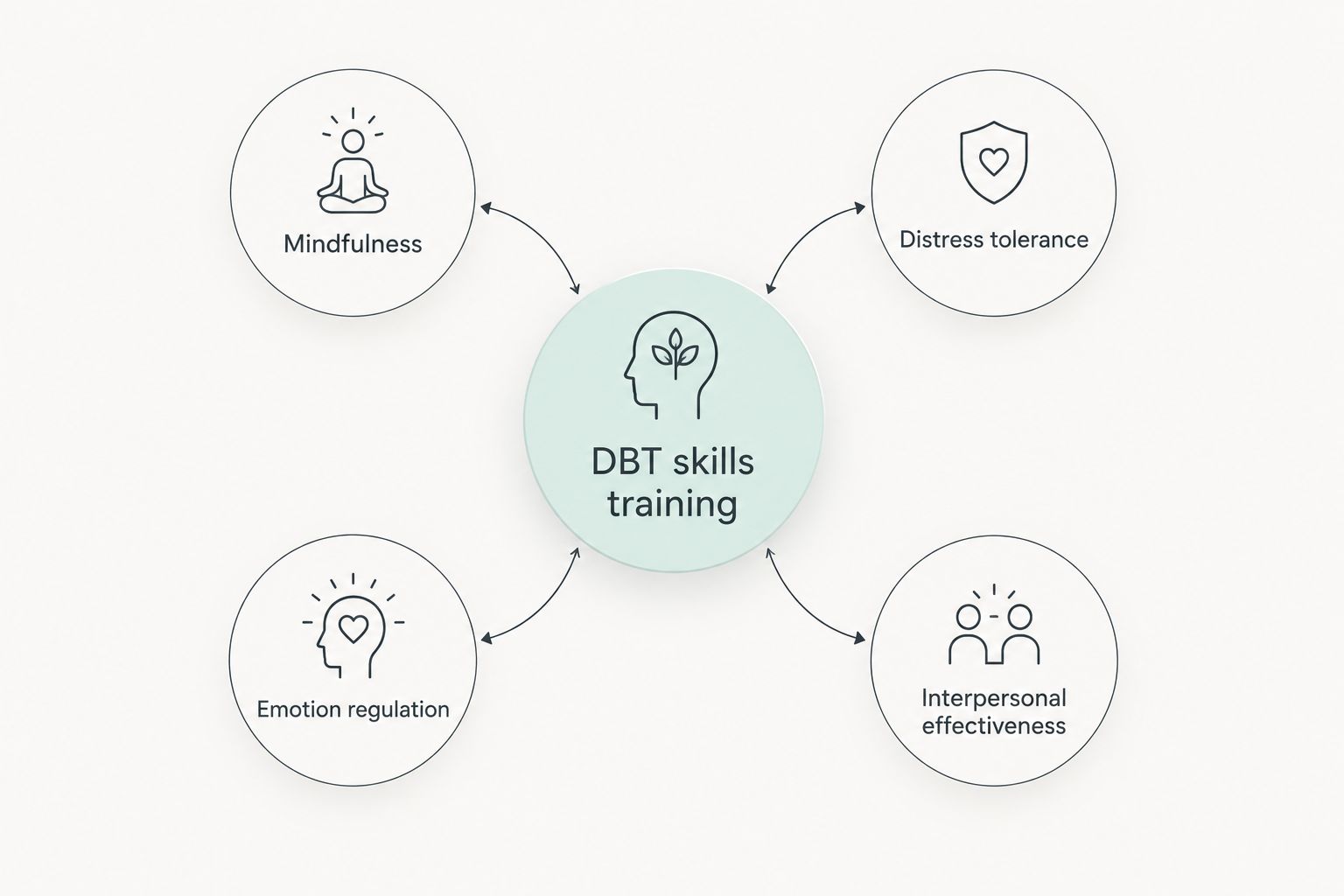
That's also why DBT-informed on a rehab website means less than it sounds. A facility can mention DBT concepts in a general therapy group without running the structured, weekly individual-plus-group-plus-coaching model the therapy was actually designed around. In South Africa in 2026, the gap between a centre with a DBT-trained clinician and one that just uses the term is the single biggest variable in whether the therapy works at all.
“Cherry-picking one DBT module isn’t DBT — it’s just a coping skill with a label on it.”
Getting this right matters because DBT rehab centres in South Africa aren't interchangeable. A private inpatient program, a government clinic, and an outpatient group all deliver pieces of the same framework at very different intensities and price points.
What makes the best DBT rehab centre in South Africa
- A DBT-trained or certified therapist runs individual sessions — not a general counsellor who references DBT ideas in passing.
- A structured skills group works through all four modules across the program, not just mindfulness or distress tolerance alone.
- Dual diagnosis capacity exists on-site, since DBT was built for emotional dysregulation that often includes depression, PTSD, or bipolar disorder.
- Between-session coaching or phone check-ins are available — the mechanism that separates DBT from standard CBT.
- A step-down or aftercare plan is in place, because DBT skills fade fast without practice after discharge.
- The facility can show accreditation and staff qualifications before you commit to admission.
DBT rehab centres in South Africa at a glance
| Setting | Best for | Standout feature | Key limitation |
|---|---|---|---|
| Private inpatient (e.g. The Cedars) | Structured, therapist-led DBT skills coaching | Daily access to a DBT-trained therapist in a residential setting | Requires private payment or medical aid cover |
| Medical aid-affiliated centres | Scheme-funded DBT-based treatment | Costs offset by a registered medical aid plan | Length of stay often capped by the scheme |
| Free and government-funded centres | Patients without funds for private care | No-cost access to structured group therapy | Waiting lists and shorter DBT modules |
| Intensive outpatient programs | Professionals who need to keep working | Sessions scheduled around a work day | Less containment for high-risk relapse cases |
| Dual diagnosis specialist centres | Co-occurring mental health conditions | Psychiatric oversight alongside DBT skills groups | Longer stays than addiction-only programs need |
| Teen-focused programs | Adolescents needing emotion regulation skills | DBT adapted with family involvement | Not built for adult-only settings |
1. Private inpatient rehab centres: best DBT rehab for structured residential care
Private inpatient facilities such as The Cedars, a rehab centre in South Africa, run daily programming, and DBT only works with repetition — a skill practiced once a week barely outlasts the session it was taught in. Residential structure removes the daily triggers that make new skills hard to practice, and staff are on-site if a DBT session surfaces something that needs immediate support.
Private inpatient rehab pros:
- Daily, in-person access to a DBT-trained therapist instead of a single weekly slot.
- A low-distraction environment while the four modules are still unfamiliar.
- Medical staff on-site if withdrawal symptoms overlap with an emotional crisis.
Private inpatient rehab cons:
- Time away from work or family responsibilities for the length of the program.
- Requires either private payment or a medical aid plan that covers residential addiction treatment.
Best for: patients who want daily DBT practice without commuting between sessions.
Verdict: the strongest starting point for anyone new to combining DBT and addiction treatment.
2. Medical aid-affiliated rehab centres: best DBT rehab for scheme-funded treatment
Rehab centres in South Africa that accept medical aid work through the same DBT framework but bill sessions against a psychiatric or addiction benefit. That makes the therapy reachable for patients who couldn't otherwise afford private inpatient rates, provided the scheme's benefit covers enough days for the skills training to stick.
Medical aid-affiliated pros:
- Costs are offset by a registered medical aid plan rather than paid entirely out of pocket.
- Many centres running this model still offer full DBT skills groups, not a shortened version.
Medical aid-affiliated cons:
- Length of stay is often capped by what the scheme authorises, not by clinical need.
- Not every DBT-focused facility in South Africa accepts every scheme's benefit structure.
Best for: patients whose scheme includes a dedicated psychiatric or addiction benefit — check the rehab centres in South Africa that accept medical aid breakdown before booking.
Verdict: worth pursuing first once your benefit is confirmed.
3. Free and government-funded rehab centres: best DBT rehab for patients without private funds
Government and NGO-funded rehab centres in South Africa run group-based DBT skills training at no cost to the patient, which matters when private and medical-aid options are out of reach. Programs tend to run shorter and serve more patients per facilitator than private care does.
Free and government-funded pros:
- No-cost access to structured group therapy, including DBT-based skills groups in some facilities.
- Serves patients who would otherwise go without any structured treatment at all.
Free and government-funded cons:
- Waiting lists are common, and DBT modules often run in a condensed form.
- Individual DBT coaching between sessions is less consistently available than in private settings.
Best for: patients who need treatment now and can't fund private care — the free and government-funded rehab centres list covers current options by province.
Verdict: a genuine option, not a fallback — book early given waiting lists.
4. Intensive outpatient DBT programs: best DBT rehab for working professionals
Intensive outpatient programs schedule DBT skills groups and individual sessions around a working week, usually several evenings or half-days rather than full-time residency. That suits patients who can't take extended leave but still need structured, repeated DBT practice.
Intensive outpatient pros:
- Sessions fit around a job, so income and employment continue uninterrupted.
- Skills get tested against real daily triggers immediately, rather than in a sheltered residential setting.
Intensive outpatient cons:
- Less containment if a patient is at high risk of relapse between sessions.
- Requires enough existing stability to manage unsupervised time outside the program.
Best for: employed patients who can commit to the schedule but not to full-time residency.
Verdict: solid once initial stabilisation is done — not the first stop for a severe crisis.
5. Dual diagnosis specialist centres: best DBT rehab for co-occurring conditions
DBT was designed around emotional dysregulation, which is exactly why dual diagnosis specialist centres pair it with psychiatric oversight for depression, PTSD, anxiety, or bipolar disorder running alongside the addiction.
Dual diagnosis pros:
- Psychiatric assessment and medication management run in parallel with DBT skills training.
- Treats the condition driving the substance use, not only the substance use itself.
Dual diagnosis cons:
- Programs can run longer than addiction-only treatment, which isn't necessary for every patient.
Best for: patients with a diagnosed mental health condition alongside their addiction.
Verdict: the right call whenever a co-occurring diagnosis is already confirmed.
6. Teen-focused DBT programs: best DBT rehab for adolescents
DBT for adolescents adapts the same four modules with family sessions and school reintegration built in, since teenagers rarely succeed in a program built entirely around adult routines.
Teen-focused pros:
- Family involvement is built into the program rather than added as an afterthought.
- Skills training is paced for a younger patient still developing emotional regulation.
Teen-focused cons:
- Not appropriate for adult patients, and fewer facilities in South Africa run this track specifically.
Best for: parents looking for DBT-based treatment built around a teenager, not an adult routine.
Verdict: seek this out specifically rather than placing a teenager into an adult program.
How this ranking works
The order above follows one rule: match the setting to how much structure and supervision the DBT skills actually need to stick, not which facility markets itself hardest. Private inpatient care sits first because DBT depends on repetition, and residential structure creates the most repetition per week. Everything below it trades some structure for cost, flexibility, or a specific population — none of that makes it a worse choice, just a different one for a different situation.
Ask The Cedars about DBT-based care
Talk through which setting fits your situation before you commit.
Which DBT rehab centre should you choose?
If you're undecided, start with a private inpatient rehab centre such as The Cedars — the daily structure gives DBT the repetition it needs to work in the first few weeks. Step down to an intensive outpatient program once the skills are established, and lean on a dual diagnosis specialist centre from the outset if a co-occurring diagnosis is already on record. Budget constraints point toward free and government-funded rehab centres, and a confirmed medical aid benefit makes a scheme-affiliated centre worth checking first. In 2026, the setting matters more than the specific brand name — pick by routine and budget, then confirm the therapist running the DBT sessions is actually trained in it.
FAQ
What is DBT and why is it used in addiction rehab?
DBT, or Dialectical Behaviour Therapy, teaches four skill sets — mindfulness, distress tolerance, emotion regulation, and interpersonal effectiveness — to manage the emotional swings that often drive substance use. It was originally built for chronic suicidality and later adapted for addiction because the two conditions overlap so heavily.
How much does a DBT rehab centre cost in South Africa?
Cost depends on whether the centre is private, medical aid-affiliated, or government-funded, and fees change over time, so check the specific facility’s current pricing directly before booking in 2026. Free and government-funded centres carry no direct cost to the patient.
Is DBT better than CBT for addiction recovery?
Neither therapy is universally better — DBT is generally preferred when emotional dysregulation, self-harm history, or borderline traits sit alongside the addiction, while standard CBT often suits addiction without that added complexity. Many dual diagnosis centres in South Africa use both.
Can DBT rehab centres in South Africa treat dual diagnosis patients?
Yes — dual diagnosis specialist centres are built specifically to run DBT alongside psychiatric treatment for depression, PTSD, anxiety, or bipolar disorder. This is the setting to choose when a mental health diagnosis is already confirmed alongside the addiction.
How long does a DBT program in rehab typically last?
Length varies by setting: private inpatient DBT tracks tend to run over a fixed residential period, while outpatient programs continue longer with less frequent sessions. There’s no single standard length across South African rehab centres, so confirm the program duration directly with the facility.
What’s the difference between DBT-informed and full DBT programs?
A DBT-informed program borrows some concepts and language from DBT without running the structured individual-plus-group-plus-coaching model. A full DBT program covers all four skill modules with a trained clinician and ongoing between-session support.
Do government-funded rehab centres in South Africa offer DBT?
Some do, typically through group-based skills training rather than full individual DBT coaching. Waiting lists and shorter module schedules are common trade-offs against the private and medical aid-affiliated alternatives.
How do I know if a rehab centre’s DBT therapist is properly trained?
Ask the facility directly for the therapist’s DBT-specific training or certification before admission — a general addiction counselling qualification isn’t the same thing. Accredited centres should be able to answer this without hesitation.
One last thing
DBT wasn't built for addiction at all — Marsha Linehan designed it in the 1980s for chronic suicidality, and it only reached rehab because emotional dysregulation and substance use feed each other so directly. That history is why the single best predictor of a good DBT rehab centre in South Africa isn't the facility's marketing — it's whether the therapist running your sessions actually trained in the full model.
Related guides