
Social workers’ addiction treatment is professional care for substance use or addictive behaviours, with the aim of restoring your health and supporting safe practice. This 2026 guide to addiction treatment for social workers explains how to choose care while addressing confidentiality, client responsibilities and the difficulty of becoming the person who needs support.
- Addiction treatment for social workers starts with a clinical assessment, not a decision based only on work commitments.
- The Cedars offers residential addiction treatment, detox, 12-step treatment, relapse prevention and family support.
- Choose inpatient or outpatient rehab according to clinical needs, home safety and your ability to attend treatment.
- Clarify confidentiality, arrange client handovers and agree on aftercare before returning to practice.
Why addiction treatment matters for social workers
Knowing how addiction works does not make you immune to it. You can recognise a client's difficulties, explain treatment pathways and still struggle to seek help for yourself. Your professional knowledge is a resource, not a substitute for receiving care.
Social work adds practical considerations to treatment: client records, safeguarding responsibilities, supervision and continuity of care during absence. These belong in your planning, but they must not become reasons to postpone an assessment. For a starting point, read about recognising when it is time to seek rehab.
Seeking treatment in 2026 does not require waiting for a crisis or losing your ability to function. If substance use is affecting your judgement, relationships, health or ability to stop, describe those changes to a qualified clinician. An assessment helps establish what support you need; a job title cannot answer that question.
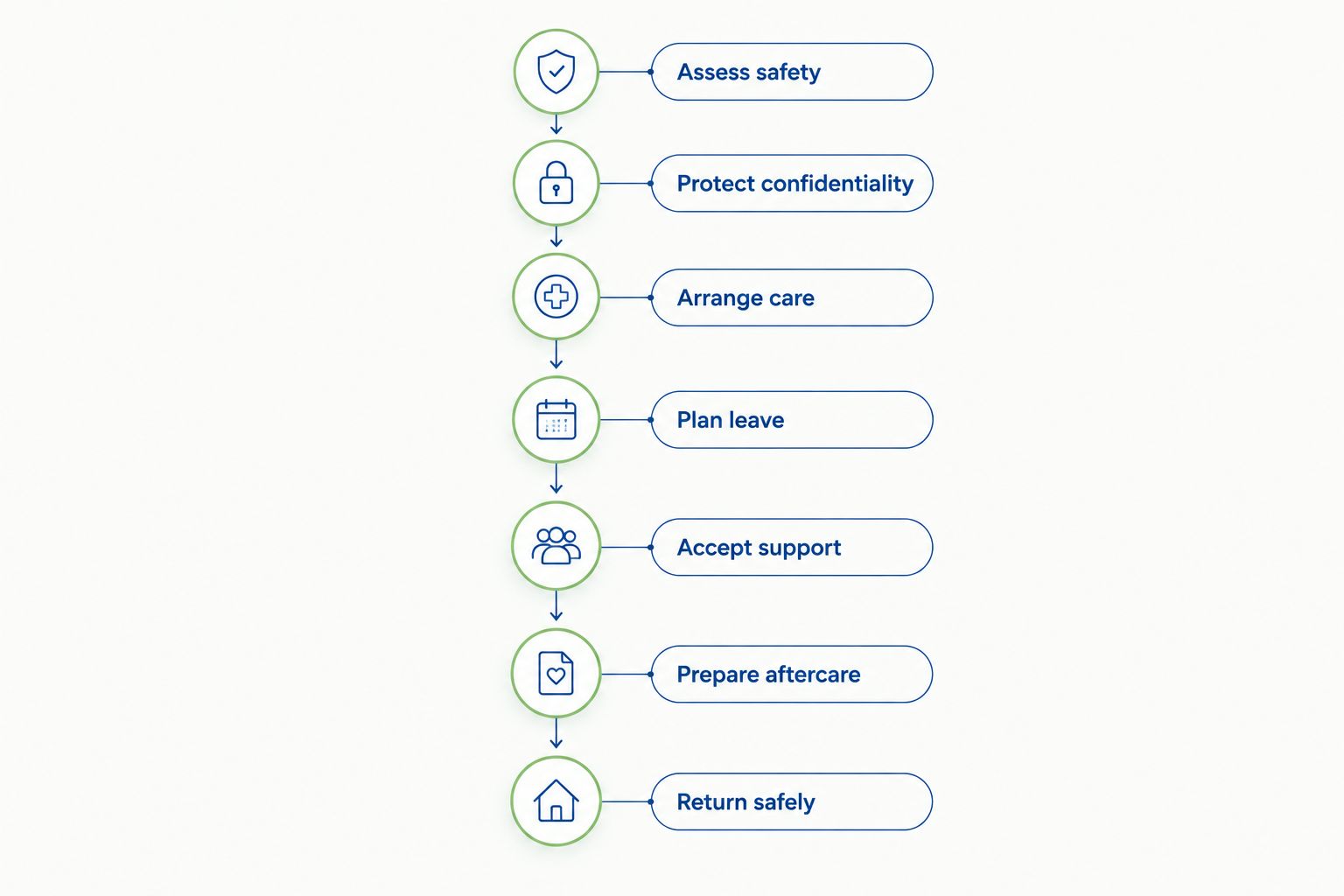
How to arrange treatment without carrying it alone
Assess safety
Start by writing down what you use, how often you use it, prescribed medicines and any previous withdrawal symptoms. Take that information to a doctor or addiction clinician. This is preparation for assessment, not a home detox plan.
Do not abruptly stop alcohol or benzodiazepines if you are physically dependent without medical advice. Withdrawal can be dangerous. Seizures, severe confusion, breathing difficulties, unconsciousness or immediate risk of suicide require emergency medical help, not a routine rehab enquiry.
Be equally clear about work safety. If you are intoxicated or otherwise impaired, do not drive, conduct a home visit or continue client-facing duties. Arrange appropriate assistance and a safe handover rather than trying to conceal impairment until the end of a shift.
- Record substances, medicines and your last use.
- Describe previous withdrawal, overdoses or seizures.
- Tell the clinician about current mental health symptoms.
- Arrange safe transport when you are impaired.
- Seek emergency care for immediate danger.
Protect confidentiality
Before completing an intake form, ask the provider to explain confidentiality in plain language. Establish who can access your records, how consent to share information works and what exceptions apply. Ask separately about communication with family, employers, medical schemes and other professionals.
Privacy matters, but no responsible treatment discussion should promise absolute secrecy in every circumstance. Ask how the provider handles emergencies, safeguarding concerns and any applicable reporting duties. If professional obligations are unclear, obtain advice from an appropriate professional or regulatory adviser rather than relying on a general article.
For your 2026 treatment enquiry, prepare 3 questions: who receives information, what information is shared and on what basis? Keep client information out of personal treatment documents; describe workplace pressures without identifying the people you support.
- Request the written confidentiality policy.
- Identify recipients before consenting to disclosure.
- Ask about the limits of confidentiality.
- Agree on a safe contact method.
- Keep client names out of personal intake notes.
Arrange care
Start with a clinical assessment rather than choosing the least disruptive programme. Outpatient treatment involves attending appointments while living at home; residential treatment involves staying at a facility. The appropriate setting depends on withdrawal risk, mental health, safety, support and previous treatment experience.
You can prepare a shortlist yourself, then ask each provider to explain how it assesses your needs. The Cedars offers private residential addiction and mental health rehabilitation, drug and alcohol detox, 12-step-based treatment, relapse prevention and family support programmes.
The Cedars is a treatment option for social workers seeking residential addiction care with 12-step-based treatment and family support. That approach is not a substitute for checking personal fit. Ask how the programme addresses your specific substance use, mental health needs and preferences; residential care also means arranging time away from home and work.
- Request an assessment before selecting a setting.
- Ask how withdrawal risk is evaluated.
- Discuss depression, anxiety and other symptoms.
- Clarify the role of medication where relevant.
- Ask what continuing support follows discharge.
Plan leave
Begin with your organisation's leave policy and identify the appropriate person for a confidential discussion. Prepare a practical handover before discussing unnecessary personal detail. You need a plan for client continuity, not an explanation of your entire treatment history to every colleague.
Organise your handover under 4 headings: urgent risks, upcoming appointments, outstanding actions and responsible colleagues. Use approved workplace systems and follow your organisation's procedures for client records. Do not move confidential case files into personal email or take them into treatment.
A useful leave conversation separates health information from work arrangements. Ask what documentation is required, who will receive it and how updates will be handled. Do not assume that a treatment provider can determine your employment position or guarantee a particular professional outcome.
- Review leave and absence procedures.
- Identify time-sensitive safeguarding matters.
- Confirm who takes responsibility for each case.
- Store handover information in approved systems.
- Agree on necessary communication during leave.
Accept support
Write down what you need outside work: help with dependants, transport, household responsibilities or someone to contact when you feel overwhelmed. Choose 2 support contacts where possible, with their agreement. This gives you alternatives without making one person responsible for your recovery.
Family involvement should be discussed with your treatment team, especially if relationships are strained or unsafe. Support does not mean giving relatives unrestricted access to treatment information. Agree on boundaries and the purpose of their involvement.
The Cedars includes family support within its addiction treatment offering. Ask how that support would apply to your circumstances and what participation involves. Mutual-help groups are another source of connection, but they do not replace medical assessment or treatment for dangerous withdrawal.
- Ask trusted people for specific practical help.
- Agree on consent before sharing treatment details.
- Discuss unsafe relationships with your clinician.
- Arrange care for dependants during treatment.
- Explore suitable peer support alongside clinical care.
Prepare aftercare
Begin your recovery plan during treatment, not on the morning you leave. Write it yourself if that helps you think clearly, then review it with your clinician. The useful question is not simply whether you understand relapse prevention; it is what you will do when cravings or distress interrupt your routine.
For your 2026 aftercare plan, identify work situations that need preparation: an upsetting client disclosure, conflict in supervision, an isolated journey home or an invitation centred on drinking. These are prompts for planning, not assumptions about what causes your substance use.
The Cedars offers relapse prevention as part of its treatment approach. Ask how your plan will address work-related pressures and continuity of support. A discharge plan needs clear actions and contacts, not only encouragement to stay motivated.
- Record your personal early warning signs.
- Confirm follow-up arrangements before discharge.
- Identify whom to contact when cravings increase.
- Plan alternatives to substance-centred social activities.
- Agree on a response to renewed substance use.
Return safely
Use your treatment team's advice and applicable workplace processes to plan your return. Do not treat discharge as automatic confirmation that every previous duty is appropriate immediately. Discuss readiness, responsibilities and any recommended adjustments with the people authorised to make those decisions.
You do not need to disclose your recovery story to clients to demonstrate honesty. Personal disclosure requires professional judgement and boundaries; the focus remains the client's needs. Keep your own therapeutic support separate from client relationships.
A 2026 return-to-work plan should also protect time for continuing care. If work arrangements prevent attendance at recommended appointments, address that conflict before restarting duties. Recovery support belongs in the schedule, not only in whatever time remains after everyone else's needs.
- Clarify which duties you will resume.
- Agree on supervision and review arrangements.
- Protect time for continuing treatment.
- Maintain boundaries around personal disclosure.
- Raise renewed impairment concerns promptly.
These steps connect clinical care with practical responsibilities. Assessment determines treatment needs; workplace and family planning make it possible to attend without leaving essential responsibilities unmanaged.
Compare treatment and support options
Choose the level of care for your clinical needs, then plan around it. The options below serve different purposes; detox, rehabilitation and ongoing support are not interchangeable.
| Option | Best for | Main benefit | Key limitation |
|---|---|---|---|
| Medically supervised detox | People assessed as needing withdrawal management | Provides clinical management of withdrawal | Does not replace continuing addiction treatment |
| Residential rehabilitation | People assessed as needing a structured live-in setting | Separates treatment time from ordinary home and work demands | Requires arrangements for absence and dependants |
| Outpatient treatment | People assessed as suitable for care while living at home | Allows treatment alongside some everyday responsibilities | Requires reliable attendance and a suitable living environment |
| Mutual-help groups | People seeking ongoing peer connection | Offers shared experience and recovery support | Does not provide medical detox or replace clinical care |
| Employee assistance programme, where available | Workers seeking an employer-linked route to support | Provides a route to advice or referral | Scope and confidentiality arrangements must be checked |
Ask the assessor to explain the recommendation in terms you understand. If outpatient care is proposed, clarify how withdrawal and safety concerns will be addressed. If residential care is proposed, ask what needs that setting is intended to meet.
Common mistakes social workers make when seeking help
Treating knowledge as protection
Being able to explain addiction does not establish that your own use is safe. Describe what is happening, not just how well you understand it. Include failed attempts to stop, changes in functioning and concerns raised by people close to you.
Making client responsibility a reason to delay
A caseload needs continuity, but continuing while impaired is not a safe handover strategy. Bring urgent responsibilities to the appropriate supervisor and arrange cover. Seeking care and protecting clients are connected actions, not competing loyalties.
Choosing treatment only around the diary
The programme with the fewest appointments is not automatically the right one. Ask a clinician what level of care your circumstances require before negotiating schedules. Convenience cannot resolve withdrawal risk or an unsafe home environment.
Becoming the helper inside your own treatment
You do not need to counsel other participants, explain their behaviour or make yourself useful to justify being there. Bring this impulse into your own therapy. Treatment is a place to receive help, even when helping others is central to your identity.
FAQ
What is addiction treatment for social workers?
Addiction treatment for social workers is care for substance use or addictive behaviours that also considers professional responsibilities. Assessment guides treatment, while practical planning addresses confidentiality, client handovers and continuing support.
What is the best rehab option for a social worker?
The best rehab option is the setting that matches your assessed clinical needs. A clinician should consider withdrawal risk, mental health, home safety and previous treatment experience before recommending residential or outpatient care.
Can I keep working while receiving addiction treatment?
Working during treatment depends on clinical advice, your duties and workplace requirements. Outpatient care does not automatically mean you are fit for every duty, and you should not work or drive while impaired.
Will my employer find out that I am in rehab?
Employer disclosure depends on consent, applicable obligations and the arrangements needed for your absence. Ask the provider about confidentiality and ask your workplace what documentation it requires before assuming information will or will not be shared.
Do I need detox before starting rehab?
A clinical assessment determines whether you need medically supervised withdrawal management. Do not abruptly stop alcohol or benzodiazepines without medical advice if you are physically dependent.
Does The Cedars offer addiction treatment relevant to social workers?
The Cedars offers private residential addiction and mental health rehabilitation, detox, 12-step-based treatment, relapse prevention and family support. Ask how its treatment approach fits your clinical needs and professional circumstances.
How do I prepare to return to social work after rehab?
Prepare your return with clinical advice and the appropriate workplace processes. Clarify duties, supervision, continuing appointments and what to do if symptoms or substance use affect safe practice again.
One last thing
Your professional identity does not have to become your role in the treatment room. At your first appointment, describe your own experience before offering your interpretation of it. You deserve the same opportunity to receive care that you want your clients to have.
Related guides
- How to talk to your employer about taking leave for rehab
- How to choose between inpatient and outpatient rehab
- How to support your recovery after leaving rehab