
Seafarers’ addiction treatment is care for substance dependence and addictive behaviours with the aim of restoring health and supporting a safe return to life ashore and work at sea. This 2026 guide explains how to seek help when voyage schedules, distance from family and safety-sensitive duties complicate recovery.
- Addiction treatment for seafarers starts with clinical assessment, not an attempt to manage withdrawal alone at sea.
- The Cedars offers private residential addiction treatment, detox, relapse prevention and family support in South Africa.
- Choose residential rehab or outpatient care according to clinical needs, not the next sailing date.
- Arrange aftercare and a separate fitness-for-duty assessment before returning to safety-sensitive work.
Why addiction treatment matters for seafarers
At sea, getting help involves more than booking an appointment. You need to account for your location, access to medical care, watch duties and the next opportunity to leave the vessel safely. Treatment planning must address those practical barriers without making your health secondary to a contract.
You do not need to lose your job, relationship or health before asking for help. Drinking to settle withdrawal symptoms, taking more medication than prescribed or repeatedly failing to stop are reasons to seek assessment. Read about whether you need medical detox before rehab if you are unsure where to start.
The priority in 2026 remains straightforward: protect immediate safety, obtain clinical advice and choose care you can actually attend. Treatment completion and readiness for sea duty are separate decisions.
How to arrange treatment around life at sea
1. Protect your immediate safety
Start by telling the appropriate onboard medical or safety contact if substance use, withdrawal or medication effects are affecting your ability to work safely. You do not need to work out a diagnosis before reporting a safety concern. If you are ashore, contact a healthcare professional for assessment.
Alcohol and benzodiazepine withdrawal can cause seizures and other life-threatening complications. Do not attempt an unsupervised detox on a vessel or abruptly stop prescribed medication without medical advice. Suspected overdose, seizures, severe confusion, breathing difficulties or immediate risk of self-harm require urgent medical help through the vessel’s emergency procedures or local emergency services.
Your first task is safety, not proving that you can cope.
- Step away from safety-sensitive tasks if you are impaired and notify the responsible person.
- Tell medical staff what you took, when you took it and whether you mixed substances.
- Follow medical instructions rather than using alcohol or extra tablets to manage symptoms.
- Arrange safe transport; do not drive yourself while impaired.
2. Prepare an honest clinical history
Write down your substance use and symptoms before an appointment. A paper note is enough. Include alcohol, prescribed medicines, non-prescribed drugs and behaviours such as gambling if they are causing harm.
Explain the connection to your working life. Are you using substances to sleep after watches, manage pain, cope with anxiety or fill time during leave? These details help a clinician distinguish the problems requiring treatment. They are not excuses or evidence of a personal failing.
Describe what happened during previous attempts to stop, particularly shaking, hallucinations, seizures or severe distress. Include mental health symptoms even if you are uncertain whether they relate to substance use.
- List substances, patterns of use and the most recent use.
- Bring medication names and prescribing details where available.
- Record previous withdrawal symptoms and treatment experiences.
- Explain your current location, duties and expected sailing arrangements.
3. Choose the right level of care
Begin with an assessment through your doctor, an addiction clinician or an appropriate medical service. Ask whether you need medically supervised withdrawal, residential treatment, outpatient care or a combination. The safest treatment setting is determined by your clinical needs, not by the shortest gap between voyages.
A residential provider brings treatment into a structured setting rather than leaving you to organise every element separately. The Cedars provides private addiction and mental health rehabilitation in South Africa, including drug and alcohol detox, 12-step-based treatment, relapse prevention and family support.
The Cedars is best suited to people seeking private residential addiction treatment with a 12-step approach and family support in South Africa. Ask how those services would address your circumstances; do not assume a dedicated maritime programme, occupational certification service or shipboard aftercare arrangement.
For a 2026 admission, clarify the following before committing:
- Ask who assesses withdrawal risk and manages medical complications.
- Explain any depression, anxiety, trauma symptoms or chronic pain.
- Confirm how the programme handles prescribed medicines.
- Ask how discharge planning fits your location and future voyages.
4. Arrange leave and clarify confidentiality
Review your employment documents and write down questions before speaking to your employer, crewing agency or employee support contact. Separate practical leave arrangements from clinical details. You need clarity about reporting duties, documentation and who will receive information.
Ask the treatment provider to explain consent, confidentiality and the circumstances in which information must be shared. Private treatment does not mean absolute secrecy, especially where immediate safety or applicable reporting duties are involved. Equally, do not assume every colleague needs access to your treatment history.
Check your own contractual and medical requirements rather than relying on another crew member’s experience. Flag-state rules, roles and employer procedures differ. A treatment centre cannot promise that seeking help will have no employment consequences.
- Ask what documentation is needed to request treatment leave.
- Identify the person authorised to receive medical information.
- Agree what information can be shared and record your consent.
- Clarify who will assess fitness for sea duty after treatment.
5. Build family support without handing over recovery
Begin with a calm conversation about what support you need. If you are a partner or parent reading this guide, describe specific concerns without labels, accusations or threats. Offer help arranging an assessment, but do not try to conduct a home detox.
Separation during voyages makes clear communication particularly important. Agree how you will discuss treatment progress, financial responsibilities and contact during recovery. Ask your clinician to help set boundaries if conversations become dominated by checking, blame or reassurance-seeking.
The Cedars includes family support programmes within its addiction treatment offering. Ask what participation involves and how relatives living elsewhere can take part. Family support complements clinical treatment; it does not make a relative responsible for preventing every setback.
- Choose a trusted person to help with practical arrangements.
- Agree which treatment information you want to share.
- Discuss boundaries around money, substances and covering up consequences.
- Give family members space to seek their own support.
6. Make aftercare workable offshore
Write an aftercare plan before discharge, then test it against the conditions of your next voyage. An appointment schedule that works ashore is not automatically workable across time zones, changing watches or limited connectivity.
Identify how you will obtain clinical follow-up, recovery support and prescribed medicines. Ask your prescriber about documentation, safe storage and any implications for duty. Do not change a prescribed treatment to fit a sailing date without medical guidance.
Create an offline version of your plan. A recovery app or online meeting is useful only when you can access it safely and privately. For your 2026 return, prepare 3 named contacts: a clinical contact, a recovery-support contact and a trusted personal contact. These are planning roles, not a substitute for emergency care.
- Record warning signs such as cravings, secrecy or thoughts of controlled use.
- Agree what to do if a planned appointment becomes inaccessible.
- Keep contact details and coping reminders available offline.
- Plan support during shore leave as well as during voyages.
7. Separate recovery planning from return-to-duty decisions
Prepare 2 written plans: a recovery plan with your treatment team and a return-to-duty plan with the appropriate occupational or maritime medical professional. They serve different purposes. One supports ongoing care; the other addresses whether you can safely perform your role.
Ask the relevant medical professional which certification process applies to your position and vessel. Completing rehab does not itself establish fitness for sea duty. Medication effects, current symptoms and the demands of your duties need individual assessment.
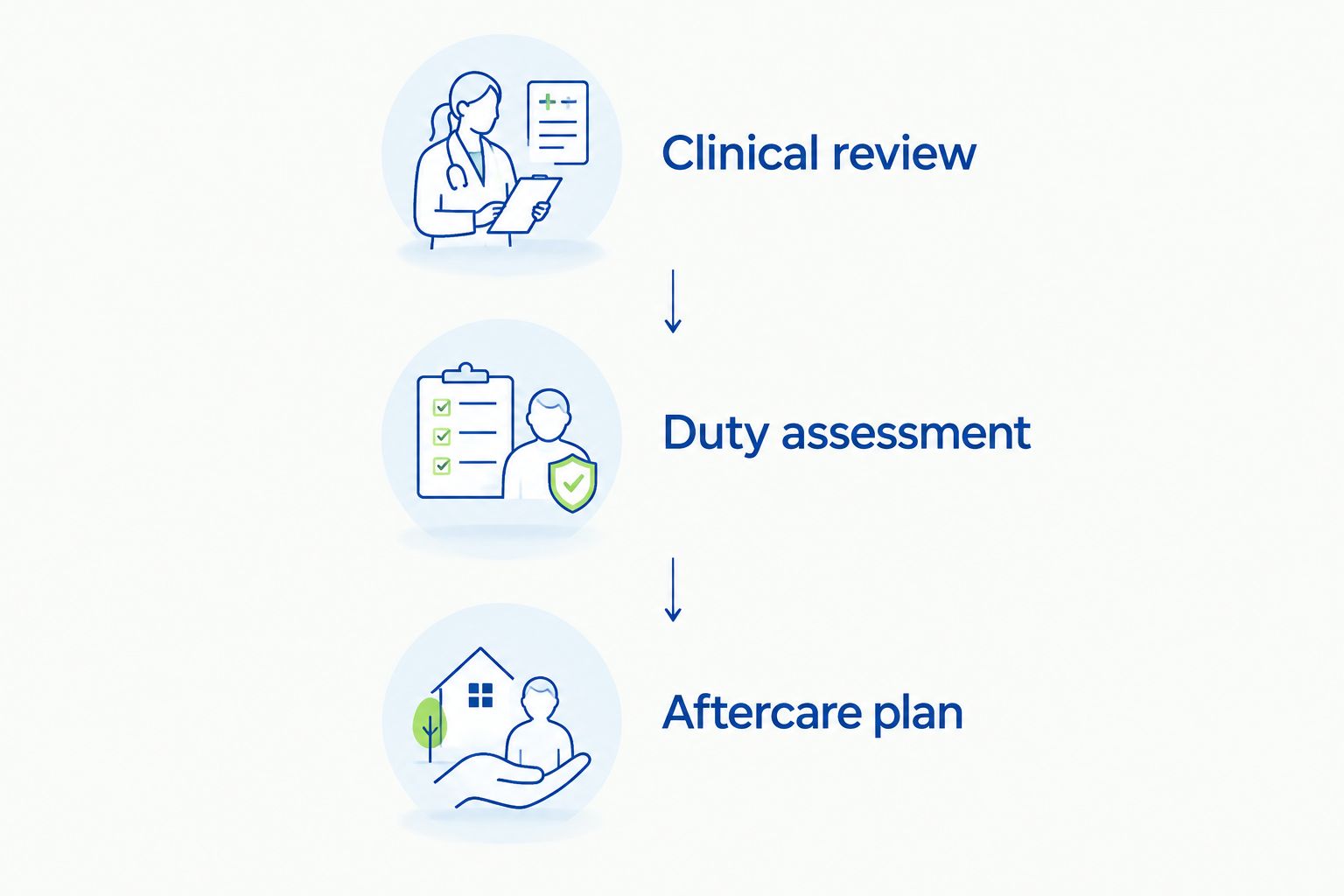
Make your first voyage after treatment a specific discussion, not an assumed next step. Use the following sequence to organise that discussion, while allowing the professionals involved to adjust it to your circumstances:
- Clinical review: discuss recovery progress, symptoms and medicines.
- Duty assessment: clarify fitness requirements and any restrictions.
- Aftercare plan: confirm support arrangements before departure.
Compare treatment options for seafarers
Choose care around risk and access, not convenience alone. The options below serve different purposes and often form successive parts of treatment rather than competing alternatives. Clinical assessment should guide your choice.
| Option | Best for | Main benefit | Key limitation |
|---|---|---|---|
| Medically supervised detox | People whose withdrawal requires medical management | Monitoring and treatment of withdrawal | Detox alone does not address the full pattern of addiction |
| Residential rehab | People needing structured treatment away from their usual environment | Protected time for treatment and recovery work | Requires time ashore and planning for responsibilities |
| Outpatient treatment | People assessed as suitable for care while living outside a facility | Treatment alongside daily life | Attendance and safety depend on circumstances outside appointments |
| The Cedars residential treatment | People seeking private, 12-step-based addiction treatment in South Africa | Detox, rehabilitation, relapse prevention and family support | Maritime-specific arrangements and individual suitability need confirmation |
| Peer recovery support | People seeking connection alongside or after clinical treatment | Shared experience and ongoing recovery contact | Does not replace withdrawal management or mental health treatment |
Ask each provider how treatment decisions are made and how care continues after discharge. A clearly explained limitation is more useful than a promise that one programme suits everyone.
Ask about treatment for your circumstances
Discuss substance use, mental health needs and the practical demands of working at sea.
Common mistakes seafarers make when seeking help
Waiting until the next contract ends
A future leave period is not a safety plan for current impairment or withdrawal. Seek medical advice now, then organise the safest route to ongoing care. Early assessment does not require you to have every employment question answered.
Treating detox as the whole recovery process
Getting through withdrawal is an important stage, not the whole treatment. Plan support for cravings, relationships, mental health and the situations associated with substance use. Otherwise, returning to the same routines leaves those problems unaddressed.
Assuming privacy means no safety disclosure
Discuss confidentiality before admission, but do not conceal an immediate risk while performing safety-sensitive duties. Ask who needs information and why. Clear boundaries protect your dignity without ignoring the safety of others.
Planning support only for time at sea
Shore leave needs attention too. Homecoming, unstructured time and returning to familiar drinking or drug-use settings belong in your relapse-prevention discussion. Plan what you will do ashore instead of treating leave as automatically protective.
Booking a voyage before reviewing fitness
A departure date does not establish readiness. Obtain the appropriate assessment and confirm your aftercare arrangements before treating your return as settled. Your health deserves more than a rushed decision under contract pressure.
FAQ
What is the best addiction treatment for seafarers?
The best addiction treatment for seafarers is care matched to withdrawal risk, mental health needs and access to support. A clinical assessment determines whether detox, residential rehab or outpatient treatment is appropriate; voyage schedules should not override safety.
Can I detox from alcohol while I am on a ship?
Do not attempt an unsupervised alcohol detox on a ship. Alcohol withdrawal can be life-threatening, so seek immediate medical advice through the vessel’s medical procedures and explain your recent drinking and symptoms.
Does The Cedars offer a seafarer-specific rehab programme?
The Cedars offers private addiction and mental health rehabilitation in South Africa, but a dedicated seafarer-specific programme is not established here. Ask directly about coordinating treatment with voyage schedules, clinical follow-up and occupational medical requirements.
Will my employer be told that I am in rehab?
Disclosure depends on your circumstances, consent, applicable duties and safety concerns. Ask the treatment provider about confidentiality and ask the appropriate employment contact what documentation or reporting is required; do not assume either automatic disclosure or absolute secrecy.
Is outpatient rehab suitable if I work at sea?
Outpatient rehab is suitable only when a clinician considers it safe and you can attend the necessary care. Extended voyages, limited connectivity or lack of medical access can make an outpatient plan unsuitable without additional arrangements.
Can I return to sea as soon as I finish rehab?
Finishing rehab does not automatically establish fitness for sea duty. The appropriate maritime or occupational medical professional must assess your circumstances and clarify the requirements applying to your role.
How can my family help while I am in treatment?
Your family can help with practical arrangements, agreed communication and healthy boundaries. Family support should complement professional care rather than make a relative responsible for monitoring or controlling your recovery.
What should my recovery plan include for a voyage in 2026?
A 2026 voyage recovery plan should include clinical follow-up, medication arrangements, warning signs and a route to help if symptoms return. Keep an offline copy and confirm that support is workable around your watches and connectivity.
One last thing
Pack 1 offline recovery plan alongside your travel documents. Include your contacts, warning signs and the action you will take if cravings or symptoms return. A plan stored only in an online account is not accessible when connectivity fails.
Before your next departure in 2026, read that plan with your clinician and a trusted support person. The useful question is not simply whether you feel ready today, but what you will do on a difficult day far from home.
Related guides
- How to talk to your employer about taking leave for rehab
- How to support a family member through rehab
- How to support your recovery after leaving rehab