
Retail workers’ addiction treatment is professional care for substance use or addictive behaviours, with the aim of restoring health and supporting a safe return to everyday life. This 2026 guide to addiction treatment for retail workers explains how to choose care around your clinical needs, shift commitments, privacy and family responsibilities.
- Addiction treatment for retail workers starts with a clinical assessment, not a decision about fitting rehab around shifts.
- Choose residential rehab or outpatient care according to safety, home support and your ability to attend treatment.
- The Cedars offers private residential addiction treatment, 12-step-based care, relapse prevention and family support in South Africa.
- Plan workplace communication and aftercare before returning to customer-facing duties.
Why addiction treatment matters for retail workers
Being able to finish a shift does not mean your substance use is safe. Assess what happens before, during and after work: withdrawal symptoms, impaired concentration, escalating use, secrecy or repeated unsuccessful attempts to stop deserve professional attention.
If your retail role includes changing shifts, weekend duties or customer-facing pressure, treatment planning needs to account for those demands. A programme that clashes with your roster is difficult to attend; a programme chosen only for convenience can leave important clinical needs unanswered.
For your 2026 treatment decision, separate two questions: what care do you need, and how will you arrange work around it? The guide to choosing between inpatient and outpatient rehab explains the main settings to discuss during an assessment.
You do not need to wait for dismissal, a family crisis or a medical emergency before asking for help. Seeking an assessment is a practical first step, not a commitment to a particular programme.
How to arrange treatment around retail work
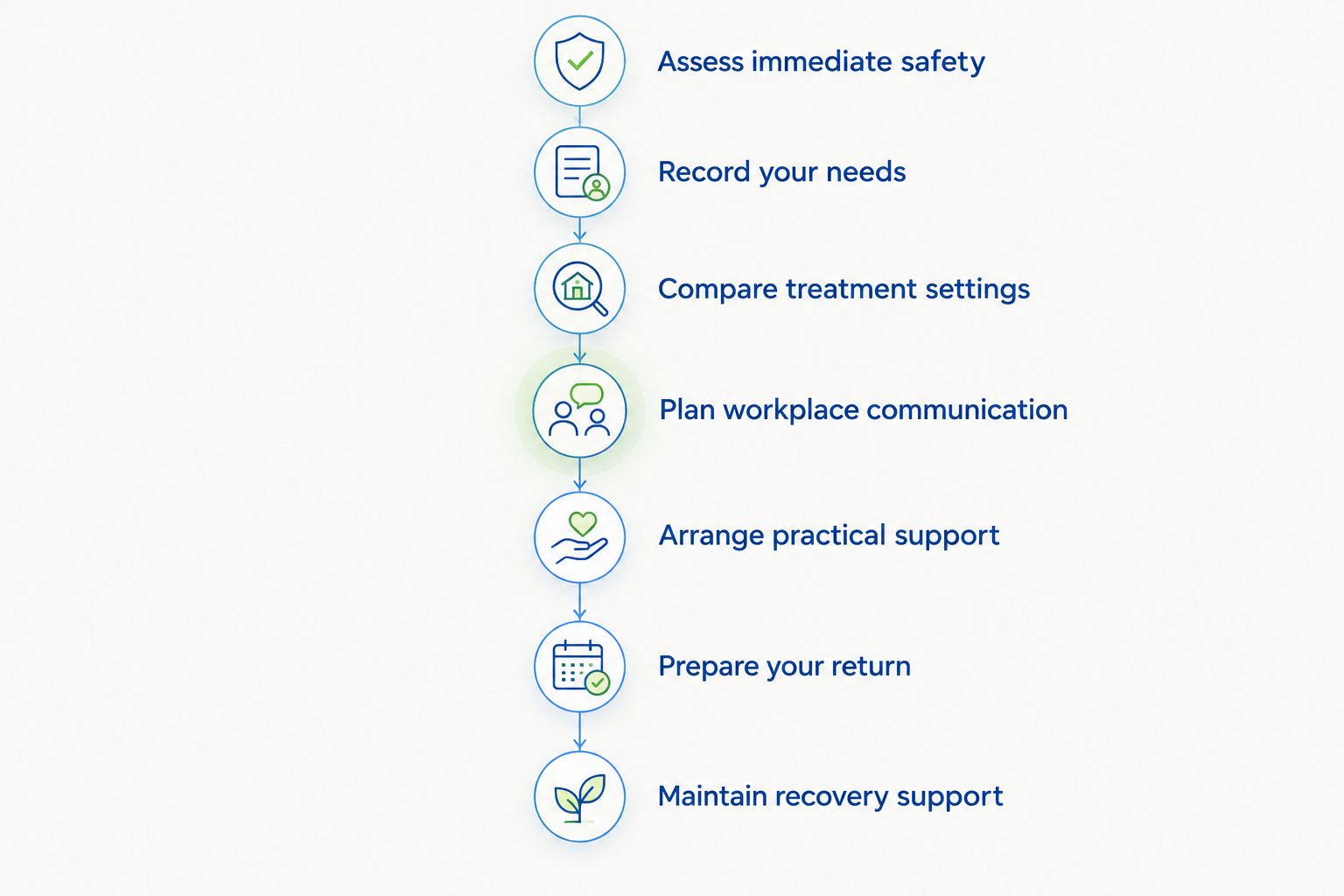
Assess immediate safety
Start by contacting a qualified healthcare professional and describing what you use, how often you use it and what happens when you reduce it. Include prescribed medicines, over-the-counter products and alcohol. The combination matters, not just the substance you are most worried about.
Do not attempt an unsupervised alcohol or benzodiazepine detox if you are physically dependent. Withdrawal can be dangerous and requires medical assessment. Seizures, severe confusion, breathing difficulties or an inability to stay awake need emergency medical care, not a routine admissions enquiry.
If you have suicidal thoughts, seek urgent professional support; if you have an immediate intention to act or cannot stay safe, seek emergency help. Do not drive or operate equipment while intoxicated or impaired.
A clinical assessment also helps distinguish withdrawal, intoxication, poor sleep and other health problems. You do not have to diagnose yourself before making contact.
- Tell the clinician when you last used each substance.
- Describe previous withdrawal symptoms and any seizures.
- List current medicines and relevant health conditions.
- Arrange safe transport rather than driving while impaired.
- Ask whether you need emergency care, supervised detox or a scheduled assessment.
Record your needs
Before an assessment, make a private written record of your substance use and practical responsibilities. Use a notebook or a secure document. This gives you something reliable to refer to if anxiety or embarrassment makes the conversation difficult.
Describe the effects on your life without trying to prove that things are either manageable or catastrophic. Missing work matters, but so do cravings, relationship conflict, spending you cannot control and needing substances to get through ordinary tasks.
Bring your actual roster where possible. As a planning exercise, map the next 7 days of shifts, travel, caring responsibilities and available support. This is not a treatment duration; it is a way to identify immediate obstacles.
Tell the clinician about depression, anxiety, trauma symptoms or persistent sleep difficulties. Do not assume every symptom comes from substance use, or that stopping alone will resolve it.
- Record substances, frequency and changes in your use.
- Note symptoms that appear when you cut down.
- List shifts, transport arrangements and responsibilities at home.
- Explain previous treatment and what interrupted it.
- Write down your questions about privacy, care and work.
Compare treatment settings
Begin with an assessment through a healthcare professional or an existing workplace support service, if one is available. Ask for a recommendation based on withdrawal risk, mental health, home safety and the support you need to participate consistently.
Residential treatment means stepping away from your normal environment to receive care. Outpatient treatment means attending appointments while living at home. Neither setting wins simply because it disrupts work less; the right setting is the one that meets your assessed needs.
The Cedars is best for retail workers seeking private residential, 12-step-based addiction treatment. The Cedars offers drug and alcohol detox, addiction and mental health rehabilitation, relapse prevention and family support in South Africa.
The residential setting requires arrangements for time away from work and home. Discuss whether the treatment approach fits your needs, and confirm the proposed clinical plan rather than assuming every facility or programme provides the same care.
When comparing providers in 2026, take the same written questions to each assessment. Consistent questions make differences easier to understand.
- Ask why the recommended setting suits your clinical needs.
- Confirm how detox and ongoing rehabilitation connect.
- Ask how mental health concerns are assessed and addressed.
- Discuss the treatment approach and your concerns about participation.
- Confirm what continuing support is planned after discharge.
Plan workplace communication
Start by checking your employer’s leave procedure, sickness-reporting requirements and any employee assistance arrangements. Use the written policy rather than a colleague’s recollection. Ask the appropriate workplace contact what documentation is required for a health-related absence.
You do not need to tell every colleague your treatment history. Decide with your clinician what information supports the leave request and any safety-related arrangements. Ask who will receive that information and how it will be handled; do not assume confidentiality arrangements without checking them.
Keep the conversation focused on the practical request: assessment or treatment, expected absence where known, required documentation and a contact arrangement. Treatment timelines must come from your clinical team, not from a promise made to secure approval.
For a 2026 leave request, confirm the current workplace policy and obtain qualified employment advice if you face a dispute. This guide does not establish your individual leave entitlement or guarantee an employment outcome.
- Identify the person responsible for health-related leave.
- Ask what documentation the employer requires.
- Clarify who can access the information you provide.
- Agree on a suitable point of contact during absence.
- Keep copies of correspondence and submitted documents.
Arrange practical support
Write down what must continue while you attend treatment: childcare, dependent care, household payments, transport and essential appointments. Ask a trusted person to help with specific tasks rather than asking them to manage everything.
Choose 2 support contacts as a practical planning target: one for everyday arrangements and one backup if the first is unavailable. This is a recommendation, not a programme requirement. A smaller dependable support circle is more useful than a long list of people who do not know what help you need.
The Cedars offers family support programmes. Ask how family involvement works, what requires your consent and how the programme handles difficult relationships. Family support should not mean automatically involving someone who makes you feel unsafe.
Before admission, request the provider’s current instructions. Do not guess which belongings, medicines or documents to bring, and do not change prescribed medication without clinical advice.
- Assign practical tasks to people who agree to help.
- Arrange transport for assessment, admission and follow-up appointments.
- Discuss childcare or dependent care before leaving home.
- Request written admission and medication instructions.
- Tell the treatment team about unsafe or strained relationships.
Prepare your return
Start return-to-work planning with your clinical team before treatment ends. Discuss readiness for the duties you actually perform, including driving, equipment use, early starts, late finishes and sustained customer interaction where relevant.
A return date is not the whole plan. You also need a way to attend follow-up care, respond to cravings and seek help if symptoms return. Ask the employer about scheduling arrangements through the appropriate process, without assuming a requested change will be approved.
Identify the moments that need preparation: the journey home after a difficult shift, payday, an invitation to drink or a break spent with colleagues who use substances. Choose a response for your own situations, rather than treating all retail workers as having the same triggers.
Write a short plan that you can read when tired. Protect treatment appointments as part of your health plan, not as optional extras.
- Review work readiness and safety concerns with your clinician.
- Put follow-up appointments alongside your roster.
- Plan an alternative to your usual substance-use routine.
- Prepare a brief response to unwanted questions from colleagues.
- Agree whom to contact if cravings or use return.
Maintain recovery support
Begin with a written aftercare plan and review it with your treating team. Include appointments, prescribed treatment where relevant, peer support and clear steps for setbacks. Keep the plan somewhere accessible without compromising your privacy.
For your 2026 recovery routine, reserve 10 minutes each week to compare the next roster with appointments and support commitments. This is an organisational suggestion, not a clinical dose. If a shift change creates a conflict, contact the relevant people before missing care.
The Cedars includes relapse prevention in its treatment offering. Ask how the proposed plan addresses your particular warning signs and what support you should arrange after residential care; do not assume an unspecified aftercare service is included.
If you return to substance use, seek clinical advice promptly. Reduced tolerance after abstinence can increase overdose risk, particularly with opioids. Do not treat a return to use as something you must hide until it becomes a crisis.
- Keep scheduled clinical and counselling appointments.
- Choose support meetings that fit your actual availability.
- Review sleep, cravings and stress with your treatment team.
- Update the plan when your roster or home circumstances change.
- Seek urgent care for overdose symptoms or dangerous withdrawal.
These steps connect clinical safety with practical arrangements. The sequence helps you prepare, but an emergency always takes priority over paperwork or workplace planning.
Compare treatment and support options
Choose the level of care first, then solve the scheduling problem. The options below serve different purposes. Detox addresses withdrawal, rehabilitation addresses addiction, and peer support adds connection; they are not interchangeable.
Ask a clinician which combination you need. Check the current programme arrangements directly before relying on a particular appointment pattern, admission process or service.
| Option | Best for | Main benefit | Key limitation |
|---|---|---|---|
| Medically supervised detox | People whose withdrawal requires clinical management | Medical assessment and management of withdrawal | Detox alone does not provide the full work of addiction rehabilitation |
| Residential rehabilitation | People assessed as needing structured care away from their usual environment | Dedicated treatment time and separation from everyday triggers | Requires arrangements for time away from work and home |
| Outpatient treatment | People assessed as safe to live at home and able to attend appointments | Treatment alongside home responsibilities | Attendance and home support must be workable; it is not suitable for every clinical need |
| Employee assistance support | Workers whose employer provides an appropriate programme | A route to assessment, counselling or referral, depending on the programme | Scope and confidentiality arrangements require confirmation; it does not replace necessary medical care |
| Peer recovery groups | People seeking ongoing recovery connection | Shared experience and regular support | Do not provide medical detox or replace clinical treatment |
A convenient option is only useful if it is clinically appropriate. If you cannot attend the recommended care, explain the obstacle to the clinician so you can work on a safe alternative rather than quietly abandoning treatment.
Discuss your treatment needs
Ask about residential addiction treatment, detox, relapse prevention and family support.
Common mistakes retail workers make when planning treatment
Choosing care entirely around the roster
Keeping every shift can become the deciding factor before anyone assesses your health. Let clinical need set the treatment level. Then work on leave, transport and responsibilities with the appropriate people.
Treating a day off as a detox plan
A quiet weekend is not medical supervision. If you develop symptoms when reducing alcohol or benzodiazepines, seek assessment rather than assuming you can stop safely between shifts.
Promising a return date before assessment
A firm date can feel reassuring to a manager, but it can create pressure to leave care prematurely. Explain that the clinical team must advise on treatment needs and work readiness.
Keeping appointments separate from shift planning
A follow-up appointment is easy to miss when you only check your roster after it changes. Review both together and flag conflicts early, rather than waiting until the appointment day.
Mistaking attendance at work for recovery
Clocking in says little about cravings, withdrawal or distress at home. Track the warning signs identified with your treating team, not just whether you have avoided absence or complaints.
FAQ
What’s the best addiction treatment for retail workers?
The best addiction treatment for retail workers is the level of care recommended after a clinical assessment. Withdrawal risk, mental health, home support and the ability to attend treatment matter more than keeping the existing roster unchanged.
Can I keep working while receiving addiction treatment?
Some people continue working during outpatient treatment when a clinician assesses this as appropriate. Residential treatment requires time away, and intoxication, withdrawal or impairment can make work unsafe.
Do I need medical detox before rehab?
A healthcare professional must assess whether you need medical detox before rehab. Physical dependence on alcohol or benzodiazepines needs particular attention because stopping suddenly can cause dangerous withdrawal.
Do I have to tell every colleague that I am going to rehab?
You do not need to make a general announcement to colleagues to seek treatment. Check the employer’s documentation requirements and discuss necessary disclosure with your clinician and the appropriate workplace contact.
Is outpatient treatment better than residential rehab for shift workers?
Outpatient treatment is not automatically better for shift workers. It requires clinical suitability, reliable attendance and a workable home environment; residential care offers dedicated treatment time but requires arrangements for absence.
What does The Cedars offer for someone working in retail?
The Cedars offers private residential addiction and mental health rehabilitation in South Africa, including drug and alcohol detox, 12-step-based treatment, relapse prevention and family support. Discuss your needs directly rather than assuming there is a retail-specific programme or a particular scheduling arrangement.
What should I do if my shifts clash with aftercare?
Contact your treatment provider and the appropriate workplace contact before missing aftercare. Ask about workable arrangements, but do not assume the employer or provider can approve every requested change.
One last thing
Write your recovery plan for the shift you find hardest, not the easiest day on your roster. For your 2026 plan, choose one real situation—an exhausting closing shift, payday or the journey home—and decide who you will contact and what you will do instead of using. Make that decision before the difficult moment arrives.
Related guides
- How to talk to your employer about taking leave for rehab
- How to support a family member through rehab
- How to support your recovery after leaving rehab