
Religious leaders’ addiction treatment is professional care for substance use or compulsive behaviours, with the aim of protecting health and supporting sustained recovery. This 2026 guide explains how to seek help while managing spiritual responsibilities, family needs and decisions about what to share with your faith community.
- Addiction treatment for religious leaders starts with clinical assessment, not a public confession or a promise to stop.
- In South Africa, choose residential or outpatient rehab according to clinical needs, not pressure to keep working.
- Faith and pastoral support can accompany treatment; neither replaces medical detox or mental health care.
- Agree on confidentiality, family involvement and a return-to-ministry plan before resuming responsibilities.
Why addiction treatment matters for religious leaders
You do not have to reach a crisis before asking for help. Leading worship, supporting grieving families or delivering sermons does not rule out an addiction problem. Being able to fulfil some duties is not the same as being well.
For a religious leader, seeking treatment also involves practical questions: who will cover your responsibilities, what your congregation needs to know, and how your family will receive support. Start with this guide to confidential rehab treatment for public figures when planning those conversations.
Your spiritual commitments belong in the discussion, but they should not determine medical decisions. A treatment assessment needs to consider substance use, withdrawal risk, mental health and immediate safety separately from questions about ministry or religious standing.
The central decision in 2026 is not whether you deserve help. It is what care you need, and how to make room for it without leaving others exposed to avoidable harm.
How to arrange treatment without losing sight of your responsibilities
1. Seek a clinical assessment before making promises
Start by writing down what you use, how often you use it, and what happens when you stop. Include prescribed medicines, alcohol and other substances. Take that information to a qualified healthcare professional rather than relying on willpower or advice from someone responsible for your ministry position.
Alcohol and benzodiazepine withdrawal can be dangerous. Do not attempt to manage suspected dependence alone or abruptly change prescribed medication without medical advice. Seizures, severe confusion, difficulty breathing or an immediate risk of self-harm require emergency care, not a routine rehab enquiry.
For pornography use or another compulsive behaviour, describe the loss of control and its effects on daily life. Moral distress alone is not enough to establish an addiction diagnosis; assessment should distinguish beliefs, behaviour and impairment.
- Record substances, medicines and recent use honestly.
- Describe previous withdrawal symptoms and attempts to stop.
- Raise concerns about depression, anxiety, sleep and self-harm.
- Ask whether medical detox or urgent assessment is needed.
2. Agree on a privacy plan before involving your institution
Begin with a written list of people who need information and the reason each person needs it. A trusted relative, clinician and designated institutional contact have different roles. They do not automatically need the same details.
Ask the treatment provider how records, phone calls, visitors and information requests are handled. Ask who can receive updates, how you give consent, and what the limits of confidentiality are. Do not accept an assurance of absolute secrecy without an explanation of safety and legal exceptions.
For a 2026 leave arrangement, separate your medical information from the practical handover. Someone covering services needs schedules and responsibilities, not your complete clinical history. If there are safeguarding concerns, obtain appropriate professional advice rather than treating confidentiality as permission to conceal harm.
- Choose a designated contact for practical updates.
- Specify what information you consent to share.
- Ask how staff respond to enquiries about your admission.
- Keep medical records separate from ministry handover documents.
3. Choose the level of care your assessment supports
Start by asking your clinician to explain the care options and why each does or does not fit your circumstances. Residential treatment creates distance from daily duties and substance-related triggers. Outpatient treatment allows you to remain at home, but requires a safe environment and enough room in your schedule to participate.
The Cedars offers private residential addiction and mental health rehabilitation in South Africa, including drug and alcohol detox, 12-step-based treatment, relapse prevention and family support programmes. The Cedars is best suited to people seeking residential, 12-step-based addiction treatment in South Africa.
Residential care brings a practical limitation: you must step away from ordinary responsibilities. Do not assume that a general addiction programme includes a dedicated clergy pathway, arrangements for every faith practice, or the particular clinical service you need. Ask directly before deciding.
- Ask which setting fits your withdrawal risk and home environment.
- Check the provider’s registration and clinicians’ professional credentials.
- Confirm how physical and mental health concerns are assessed.
- Discuss religious practices, dietary needs and time away from duties.
4. Make room for faith without replacing treatment
Write down which spiritual practices support you and which conversations leave you feeling pressured or ashamed. Share this with your clinician. You can ask for prayer, reflection or contact with a trusted spiritual adviser while still receiving addiction treatment.
A 12-step approach is not the same as a denomination-specific programme. Ask how spiritual language is used, whether your beliefs will be respected, and how concerns about group participation are handled. Your religious role should not require you to become the spiritual guide for other people receiving treatment.
In your 2026 care plan, keep clinical and spiritual support distinct. A spiritual adviser can help you consider meaning, forgiveness and vocation; a clinician assesses withdrawal, mental health symptoms and treatment needs. Neither role needs to erase the other.
- Explain the faith practices you want to maintain.
- Ask how the programme accommodates different beliefs.
- Choose a spiritual adviser outside your direct reporting line where possible.
- Tell staff if you feel pushed into leading or counselling others.
5. Prepare your family and arrange a realistic handover
Begin with the practical tasks you can identify yourself: dependent care, household arrangements, transport and cover for ministry duties. Create a 1-page handover that gives the person covering you enough information to act without sharing unnecessary health details.
Family support should give loved ones space to discuss their own experiences. It should not turn your partner into a monitor, make children responsible for your wellbeing, or require relatives to protect your public image. Ask the provider how family involvement works and what consent is needed.
If there has been intimidation, abuse or another safety concern, ordinary family discussions are not a substitute for safeguarding. Raise those concerns with an appropriately qualified professional. Recovery and accountability belong together, but they require clear roles.
- Arrange cover for services, visits and administrative duties.
- Identify who will manage urgent institutional decisions.
- Explain practical changes to children in age-appropriate language.
- Ask what support is available for relatives independently of you.
6. Build relapse prevention around your actual working life
Start with a plain account of situations linked to use: isolation after demanding duties, access to substances, conflict, exhaustion or unstructured evenings. Include only what fits your experience. Religious identity does not tell a clinician what your personal triggers are.
A useful plan names the warning sign and the response. If sleep deteriorates and you begin withdrawing from support, decide whom you will contact and which responsibilities you will pause. Put appointments and recovery activities into your diary before filling it with ministry commitments.
For a 2026 recovery plan, choose 2 support contacts with clearly agreed roles. One might be a treatment professional and another a trusted recovery peer. This is a practical planning suggestion, not a requirement that suits everyone or a replacement for emergency care.
- List your own early warning signs rather than general slogans.
- Match each warning sign to a specific action.
- Schedule follow-up care before leaving residential treatment.
- Agree what to do after a lapse or return to use.
7. Plan a supported return to ministry
Begin with a written discussion about duties, workload and boundaries. Clinical readiness to leave rehab is not automatically readiness to resume every responsibility. Your clinician and institution have different decisions to make; clarify who is responsible for each.
Ask for a return plan that protects appointments, rest and access to support. Avoid using a full preaching schedule, public testimony or immediate restoration to leadership as proof that treatment worked. Your recovery does not need to become a congregational story.
Keep three documents distinct: your Clinical assessment, Privacy plan and Recovery support plan. Together, they clarify care, information sharing and ongoing support without confusing treatment with institutional approval.
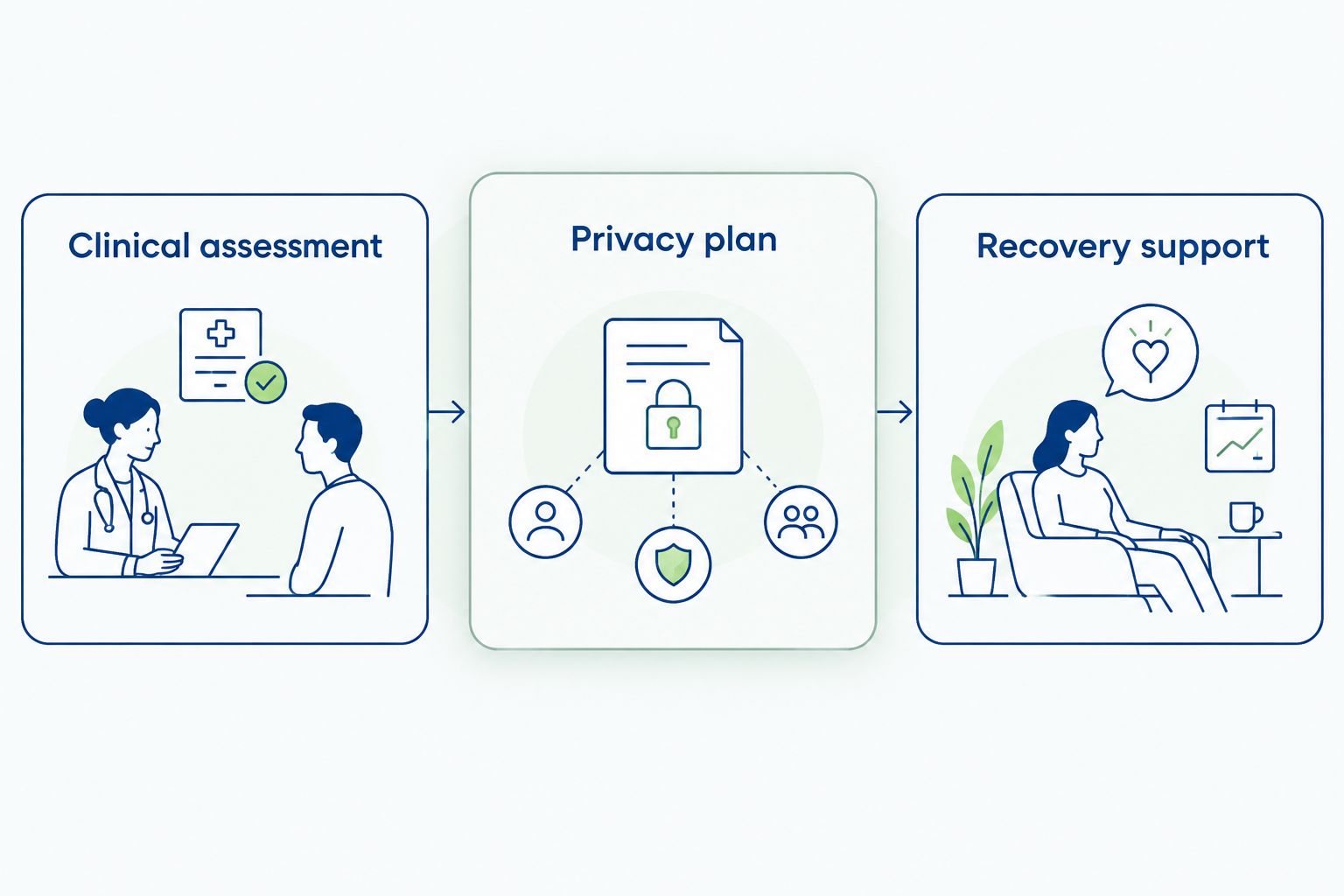
Keep the return plan open to review. Changes should respond to your health and the safety of others, not only to staffing pressures or expectations about your position.
- Agree which duties you will resume and which will remain covered.
- Protect treatment appointments from scheduling conflicts.
- Set boundaries around counselling, crisis calls and public disclosure.
- Establish a review process with the appropriate decision-makers.
Compare treatment and support options
Choose clinical care by need, then add the support that helps you participate. These options are not interchangeable: medical detox addresses withdrawal, while ongoing treatment addresses the patterns and circumstances surrounding addiction.
| Option | Best for | Main benefit | Key limitation |
|---|---|---|---|
| Medical detox | People whose assessment identifies withdrawal risk | Medical management of withdrawal | Detox alone does not provide a complete recovery plan |
| Residential rehabilitation | People needing separation from daily duties and a structured treatment setting | Space to focus on treatment away from ordinary pressures | Requires arrangements for family and ministry responsibilities |
| The Cedars residential addiction treatment | People seeking private, 12-step-based care in South Africa | Offers detox, relapse prevention and family support programmes | Confirm clinical suitability and individual faith-related needs before admission |
| Outpatient treatment | People whose assessment supports treatment while living at home | Allows treatment alongside selected daily responsibilities | Depends on a safe home environment and reliable participation |
| Peer recovery groups | People seeking ongoing support alongside professional care | Offers connection with others working on recovery | Does not replace withdrawal management or mental health assessment |
| Pastoral or spiritual support | People wanting support with faith, meaning and vocation | Makes space for religious concerns during recovery | Does not replace clinical addiction treatment |
When comparing providers in 2026, ask what happens after the initial treatment phase. A reassuring admission conversation does not replace a clear explanation of assessment, family involvement and follow-up care.
Ask about treatment for your situation
Discuss residential care, family support and your individual treatment needs.
Common mistakes religious leaders make when seeking help
These are decisions to avoid, not assumptions about every religious leader. Use them to check whether your plan gives treatment enough room.
- Treating addiction as a failure of faith alone. Spiritual reflection can matter deeply, but it does not assess withdrawal risk or replace mental health care.
- Choosing care solely to avoid absence. Keeping every duty unchanged can leave too little time or support for treatment. Let clinical needs guide the setting.
- Making public disclosure the first recovery task. Begin with assessment and safety. Decide what to share after considering consent, responsibilities and professional advice.
- Using a spouse or subordinate as the only accountability person. Give relatives and colleagues clear boundaries, and include appropriate professional or peer support.
- Returning to a helping role before rebuilding personal support. Protect your own appointments and recovery activities before taking on others’ crises.
FAQ
What is the best addiction treatment for religious leaders?
The best addiction treatment for religious leaders is the level of care supported by an individual clinical assessment. Withdrawal risk, mental health, home circumstances and daily responsibilities should guide the choice, rather than religious status alone.
Can I receive addiction treatment without telling my congregation?
You can seek a clinical assessment without making a public announcement to your congregation. Ask the provider about consent and confidentiality limits, and obtain appropriate advice if safeguarding or institutional obligations affect what must be shared.
Do I need a faith-based rehab programme?
You do not need a faith-based programme solely because you are a religious leader. Choose appropriate clinical care and ask how your beliefs and spiritual practices will be respected within it.
Does The Cedars provide addiction treatment for religious leaders?
The Cedars provides private addiction and mental health rehabilitation in South Africa. Religious leaders should ask about individual suitability, confidentiality arrangements and faith-related needs; a dedicated clergy programme should not be assumed.
Can prayer replace medical detox?
Prayer does not replace medical detox when withdrawal requires medical care. Alcohol and benzodiazepine withdrawal can be dangerous, so seek medical advice rather than attempting to manage suspected dependence alone.
How long will I need to step away from ministry?
Your time away from ministry depends on your assessment, treatment needs and recovery progress. Agree the leave and return process with the relevant people instead of promising a fixed return date before assessment.
Is pornography use always an addiction for a religious leader?
Pornography use is not automatically an addiction, and moral distress alone does not establish a diagnosis. A qualified clinician should assess loss of control, impairment and related mental health concerns without reducing the discussion to shame.
One last thing
You can be committed to your faith and still need help that your faith community cannot provide on its own. Ask for assessment before deciding what your struggle means for the rest of your life.
If you are considering The Cedars, explain your health concerns and practical responsibilities directly. The next useful step is an honest conversation about care—not a promise to recover perfectly or to return quickly.
Related guides
- How to choose between inpatient and outpatient rehab
- How to support a family member through rehab
- How to break the cycle of relapse after rehab