
A 28-day rehab programme can be long enough to stop using substances, receive treatment and begin building a sober life, but it does not guarantee lasting recovery. The important caveat is that detox, residential treatment and ongoing recovery support serve different purposes; completing a stay does not remove the need for continued care. Your discharge date should depend on your clinical progress and a safe next step, not simply the calendar.
- Is a 28-day rehab program long enough to get sober? It can start recovery, but continued care matters.
- A 28-day stay is four weeks, not a guarantee that withdrawal, cravings or mental health needs have resolved.
- The Cedars suits people seeking private residential addiction treatment, a 12-step approach and family support.
- Choose treatment length with your clinical team, and arrange aftercare before discharge.
Is a 28-day rehab program long enough to get sober?
A 28-day programme can establish abstinence; lasting sobriety requires a plan beyond discharge. The distinction matters because being substance-free inside a supported environment is different from managing cravings, relationships and access to substances at home.
If you are comparing programmes in 2026, ask what the proposed stay includes. Assessment, medically managed withdrawal where needed, counselling and discharge planning are not interchangeable. The guide to knowing whether you need medical detox before rehab explains an important starting question.
| Treatment option | Best for | What it supports | Limitation to discuss |
|---|---|---|---|
| A 28-day residential programme | People assessed as suitable for a shorter residential stay | A protected setting to begin treatment and practise recovery skills | Time is limited; ongoing needs require continued care |
| Extended residential treatment | People assessed as needing continued residential support | More time to address unresolved risks within a structured setting | A longer stay still needs a discharge and aftercare plan |
| Outpatient treatment after residential care | People assessed as safe to continue treatment while living outside rehab | Continued professional support alongside everyday responsibilities | It does not provide the same separation from home-based triggers |
These are care options, not a ranking of willpower. The right option is the level of support your assessment identifies, with regular review as your needs change.
Why this matters
You might be trying to fit treatment around work, parenting or a medical aid authorisation. Those pressures are real. They deserve practical planning, but they do not tell you whether your withdrawal has resolved or whether returning home is safe.
For a family, a fixed end date can feel reassuring. It offers something concrete during an uncertain time. Yet expecting someone to be fully recovered after four weeks places an unfair burden on both the person receiving care and the people waiting at home.
The useful question in 2026 is not whether a month proves that treatment has worked. It is whether treatment has helped you reach a safer position, and whether the next stage provides enough support to maintain that progress.
A 28-day residential stay: a beginning, not a finish line
Best for: someone whose treating team considers a shorter residential stay clinically appropriate, with a workable continuation plan.
A 28-day programme provides four weeks away from your usual environment. Depending on your assessed needs and the programme itself, that time can include stabilisation, counselling, identifying triggers and practising ways to seek help instead of using substances.
You do not need to have solved every problem before leaving. However, discharge should not leave important risks unaddressed. Ask whether the team has reviewed your physical health, mental health, cravings and living situation, rather than relying only on attendance or apparent enthusiasm.
The strength of a shorter stay is that it can begin meaningful treatment within a defined period. Its limitation is time. If much of the stay is spent managing withdrawal or an acute mental health problem, less time remains for practising recovery skills and preparing to return home.
Extended residential treatment: more time when clinically needed
Best for: someone whose assessment identifies unresolved risks that still require residential support.
An extension is a treatment decision, not a punishment for failing to recover quickly enough. The team should explain what remains unresolved, why residential care is still appropriate and how further treatment will address it.
Ask for specific goals. These might concern stabilising mental health symptoms, developing a safer discharge arrangement or practising a response to persistent cravings. A clear explanation is more useful than a general instruction to stay longer.
Extended care gives you more time within a supported setting, but time alone is not treatment. The plan needs active therapeutic work and regular review. A longer admission also requires practical arrangements around responsibilities outside rehab, without treating those pressures as evidence of clinical readiness.
Outpatient care after rehab: support in everyday life
Best for: someone assessed as safe to live outside residential care while continuing treatment.
Outpatient care allows you to work on recovery while encountering everyday situations. Its value is continuity: difficulties that emerge after discharge can be discussed with a professional rather than carried alone.
The limitation is that you return to an environment where substances, conflict or isolation might still be present. Before choosing this route, discuss your living arrangements, transport, appointment access and support network with the treating team.
For a 2026 discharge plan, ask which appointments are actually arranged and who will coordinate ongoing care. A recommendation to seek counselling is not the same as a confirmed appointment. Peer support can add connection, but it should not replace necessary medical or mental health treatment.
Why the amount of rehab you need varies
There is no single admission length that fits every person with an addiction. These factors help explain why a treatment team recommends a shorter stay, continued residential care or another level of support:
- Withdrawal and physical health: Medical needs affect when you are ready to participate fully in treatment and leave safely.
- Mental health needs: Depression, anxiety or other symptoms need assessment alongside substance use, not dismissal as a lack of motivation.
- Previous treatment and relapse: Earlier experiences help identify what support was missing and what needs to change.
- Cravings and coping skills: Recognising a trigger is different from being able to respond safely when it occurs.
- Your home environment: Access to substances, unsafe relationships and unstable accommodation affect discharge planning.
- Continuity of care: Follow-up appointments, appropriate medication management and accessible support shape the next stage.
Use these factors to guide a conversation, not to diagnose yourself. A clinician needs to assess how they apply to you, including risks that are not obvious to family members.
How do I know whether I am ready to leave rehab?
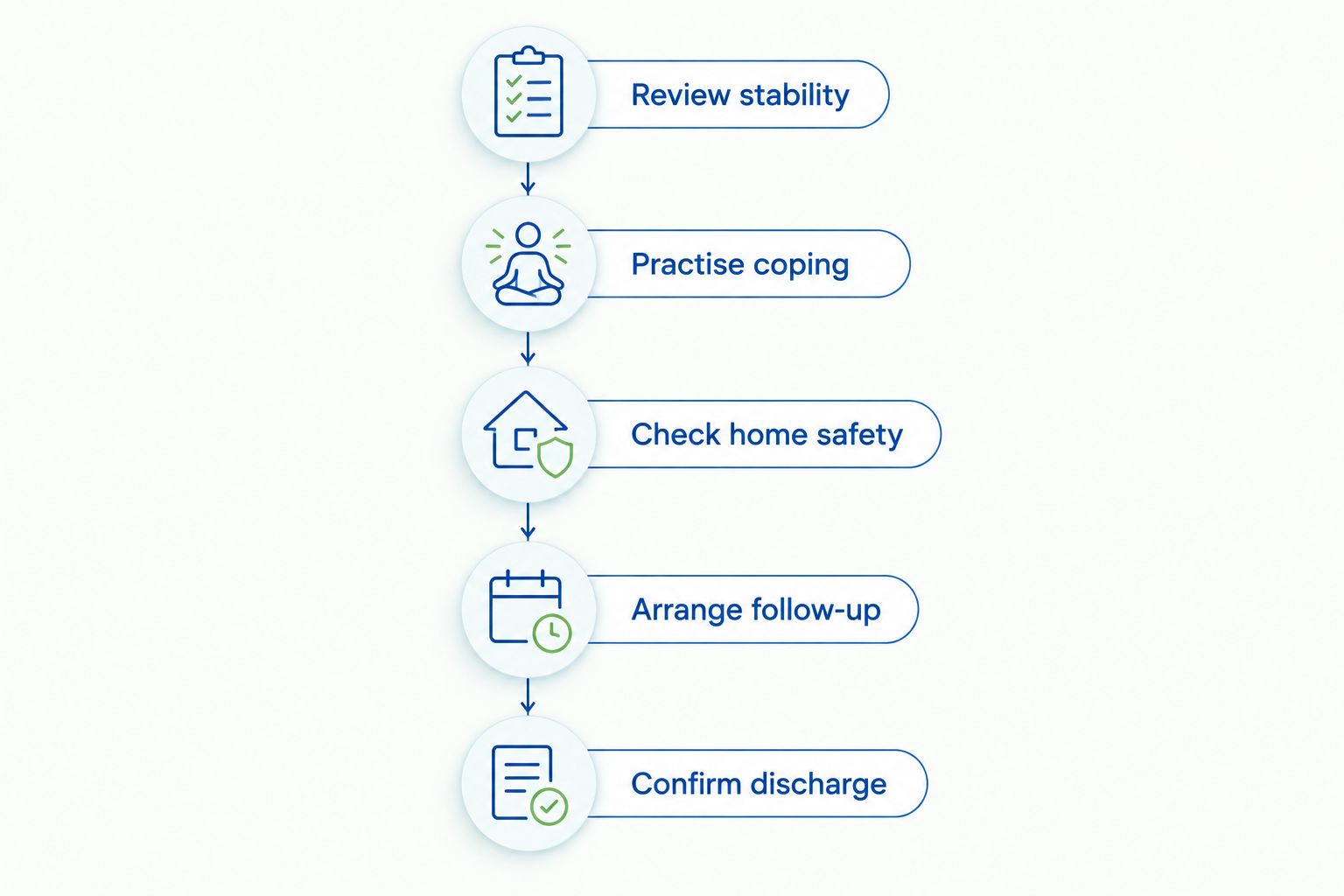
Readiness is a shared clinical decision, not a feeling you have to prove. Feeling hopeful is valuable, but hope needs a practical plan behind it. Use this sequence with your treating team before agreeing to discharge.
- Review stability. Ask whether withdrawal and immediate physical or mental health risks have been assessed and addressed. Mention symptoms honestly, even if you worry they will affect your leaving date.
- Practise coping. Explain your main triggers and rehearse what you will do when cravings, conflict or pressure to use arise. A plan should describe actions, not simply a promise to stay sober.
- Check home safety. Discuss where you will live, who will be there and whether substances are easily accessible. Identify changes that can realistically happen before you return.
- Arrange follow-up. Confirm appointments, medication instructions where relevant and the support you will use outside formal sessions. Know who to contact if your condition worsens.
- Confirm discharge. Ask the team to explain why the proposed next level of care fits your current needs. Resolve unanswered questions before leaving rather than assuming they will sort themselves out.
This sequence turns a discharge discussion into specific decisions. It also gives your family a constructive role, where you consent to their involvement, without asking them to become your treatment team.
What should a recovery plan include after discharge?
Leave with a written plan that you can use when you are tired, distressed or experiencing cravings. Keep it somewhere accessible, and share relevant parts with a trusted person if you choose.
For a discharge in 2026, confirm the following details rather than relying on general assurances:
- The clinician or service responsible for your continuing treatment.
- Confirmed follow-up arrangements and a way to ask questions between appointments.
- Medication instructions, where prescribed, including whom to contact about concerns.
- Your early warning signs and the action you will take when they appear.
- Supportive people and recovery meetings you can realistically reach.
- An urgent-help plan for a medical or mental health crisis.
Plan for ordinary difficulties too: an argument, an invitation involving alcohol, loneliness or returning to a stressful job. You do not need a perfect response to every situation. You need a response you can practise and revise with support.
A family member can help with transport or agreed check-ins. They should not be expected to supervise withdrawal, manage medication without guidance or carry sole responsibility for preventing relapse.
Can I stop drinking or taking drugs before admission?
Do not abruptly stop alcohol or benzodiazepines without medical advice if you are dependent on them. Withdrawal can be dangerous, and the safest setting needs clinical assessment. Tell the admissions clinician what you use, how regularly you use it and whether you have had withdrawal symptoms before.
Be open about prescribed medication and combinations of substances. This information helps clinicians plan safer care; it is not a moral test. Ask what to do before arrival rather than making an unsupported change yourself.
Seek emergency medical help for seizures, severe confusion, breathing difficulties or immediate danger of self-harm. Do not wait for a routine rehab appointment when urgent care is needed.
Does needing more than 28 days mean treatment has failed?
Needing more than 28 days does not mean treatment has failed. It means the next decision should reflect your current needs rather than a fixed expectation about how quickly recovery ought to happen.
Likewise, relapse after discharge calls for prompt reassessment, not shame. Discuss what happened, whether urgent medical care is needed and which parts of the support plan need to change. Do not assume that repeating exactly the same approach will address a different situation.
Families can help by asking what support is needed now. Accusations about wasted effort make an honest conversation harder; clear boundaries and professional guidance give everyone a more practical starting point.
What should I ask a rehab centre before committing?
Ask how the centre assesses treatment length and how often that decision is reviewed. Also ask whether detox is included in the proposed admission, how mental health needs are addressed and what happens if the team recommends continued care.
The Cedars is best suited to people seeking private residential addiction treatment with a 12-step approach and family support. Its stated services include drug and alcohol detox, relapse prevention and family support programmes. Explore The Cedars to discuss those services and your assessed needs.
A service description does not establish that a 28-day admission is appropriate for you. Confirm the recommended duration, the care available at the proposed facility and the follow-up arrangements directly. A residential approach also means planning time away from home and deciding whether its treatment model fits your needs.
Discuss your treatment needs
Ask about assessment, recommended treatment length and support after residential care.
FAQ
Is a 28-day rehab program long enough to get sober?
A 28-day rehab programme can be enough to establish abstinence and begin recovery, but it does not guarantee lasting sobriety. Treatment length and continued care should follow an individual clinical assessment.
Is detox the same as completing rehab?
Detox is not the same as completing addiction treatment. It addresses withdrawal and medical stabilisation; ongoing treatment addresses substance use, coping skills and recovery support.
Should I choose a longer programme even if I feel better?
Feeling better does not by itself determine the right treatment length. Ask your treating team to review your remaining risks, progress and proposed support outside residential care.
Can I return to work immediately after a 28-day programme?
Returning to work after a 28-day programme should be discussed with your treating team. Consider your clinical stability, job demands and ability to attend follow-up treatment rather than treating discharge as automatic clearance.
Does The Cedars offer support beyond detox?
The Cedars describes services that include 12-step based treatment, relapse prevention and family support as well as drug and alcohol detox. Confirm the specific arrangements recommended for your needs directly.
What should my family do if I relapse after rehab?
Your family should help you seek prompt professional reassessment while maintaining agreed boundaries. Urgent symptoms or immediate safety risks require emergency medical care, not waiting for a routine appointment.
What should I ask The Cedars about a 2026 admission?
Ask The Cedars how your treatment needs will be assessed, what duration is recommended and what support is planned after discharge. Confirm the proposed facility’s services rather than assuming every admission follows the same schedule.
One last thing
Before leaving rehab, practise contacting the person or service named in your support plan. Check that you have the right details and understand what to do when they are unavailable. A plan that looks reassuring on paper still needs to work when you need help.
You do not have to finish recovery in 28 days. You need treatment that helps you take the next safe step.
Related guides
- How to support your recovery after leaving rehab
- How to choose between inpatient and outpatient rehab
- How to support a family member through rehab